If an Alibaba supplier asks you to cancel an order, treat it as a risk signal, not an automatic scam. In many cases, the supplier is trying to avoid a late-shipment problem, reopen pricing, or push extra freight costs onto you after payment. The safest move is usually to keep the order inside Alibaba, refuse vague cancellation reasons, and require any change to be documented on-platform.
For buyers, the real question is not whether the supplier sounds sincere. It is whether canceling the order weakens your Trade Assurance protection, changes the written record, or shifts shipping responsibility onto you.
Quick answer
Don’t cancel automatically. First ask for written proof, keep the order on Alibaba, and only accept an amendment if the supplier documents the change clearly. If they refuse to provide proof, treat it as a pressure tactic and prepare for dispute.
Common reasons suppliers ask you to cancel an order
Not every cancellation request means the supplier planned to cheat you from day one. But in practice, the request usually comes from one of five situations.
1. They quoted too aggressively and regret the price
This is one of the oldest Alibaba problems: a supplier wins the order with a low quote, then later claims raw material costs, labor costs, or freight costs changed. In practice, this is a standard Alibaba risk pattern rather than a rare exception.
If the supplier is suddenly asking you to cancel and reorder at a higher price, that usually means the original quote was either unrealistic or deliberately low.
2. They cannot ship on time
Trade Assurance is strongest when the contract clearly states a shipping deadline and the supplier misses it. If the supplier sees that deadline coming and knows they will miss it, they may try to get you to cancel first instead of letting the order become a delay dispute.
That is why a request to cancel often appears right before production finishes, right before shipping, or right after the promised ship date slips.
3. They want to move the discussion off-platform
If the supplier starts saying things like “let us cancel this one and handle it privately” or “please wire the difference directly,” step back. Trade Assurance only protects payments made through Alibaba under the covered order terms. Once the money trail moves outside the platform, your leverage drops fast.
If you need a refresher on what these patterns look like in the wild, this guide to common Alibaba scams covers the broader logic behind these tactics.
4. They made a genuine logistics or quoting mistake
Sometimes the mistake is real. Freight quotes can change. Product dimensions can be entered incorrectly. A supplier may also discover that the shipping method they assumed is not valid for your destination or product type.
A real mistake, however, still needs real proof. A legitimate supplier should be able to explain:
- what changed,
- why it changed,
- how much the difference is,
- and which part of the quote was wrong.
“Please cancel first” is not an explanation.
5. They want you to choose a buyer-friendly-looking but seller-protective reason
This is where many buyers get trapped. The supplier may ask you to choose a cancellation reason that sounds harmless, such as “No Longer Needed.” But that wording can make the platform record look like the buyer changed their mind rather than the supplier failing to perform.
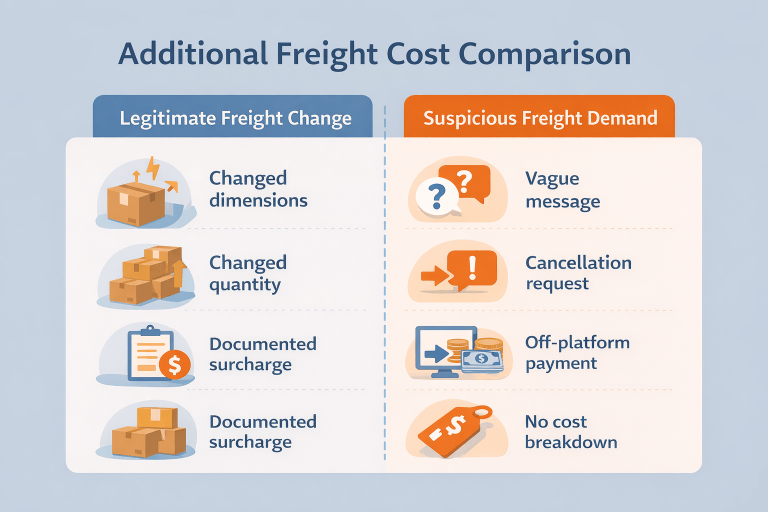
The “Additional Freight Cost” trap: When is it legitimate?
An extra freight request is not automatically fake. But it is only legitimate when the supplier can tie it to a specific, verifiable change.
Legitimate examples include:
- you changed the order quantity after the quote,
- The carton dimensions or chargeable weight turned out very different from the approved spec,
- you added packaging, inserts, or bundled items,
- the original quote clearly excluded a destination surcharge, remote-area fee, or import charge.
Red-flag versions look different:
- “Shipping company raised the price, please pay now” with no breakdown
- “DDP is more expensive than expected” after the supplier already sold you a DDP quote
- “Customs is asking for more money” with no customs document or broker detail
- “Please cancel this order and create a new one” instead of revising the terms on Alibaba
Under Trade Assurance, contract terms matter more than chat sympathy. Alibaba’s own guidance says disputes depend on whether the shipping time or quality standards in the contract were met, and the protection only works when the order terms are documented inside the platform.
So if the supplier claims extra freight is necessary, ask for all of the following inside Alibaba chat or order documents:
- the original shipping term,
- the updated freight quote,
- the reason for the change,
- the line-item breakdown,
- and whether the supplier is asking to amend the existing order or cancel it.
If they cannot provide that, assume the request is a margin-recovery move, not a clean logistics adjustment.
Quick freight decision rules
Use this checklist before agreeing to any extra shipping payment.
Situation | What it usually means | Best next step |
|---|---|---|
Supplier gives a line-item freight breakdown and ties it to a real change | Possibly legitimate | Review it and amend only inside Alibaba |
Supplier asks for more money but gives no supporting documents | Risk signal | Ask for proof and do not pay yet |
Supplier asks for private transfer or off-platform payment | High-risk behavior | Refuse and keep everything on Alibaba |
Supplier asks you to cancel and reorder at a higher total | Price reset attempt | Do not cancel until the record is clear |
Supplier cites DDP but cannot explain what was included | Scope problem or padding | Ask for written scope and freight documents |
What proof should you ask for before agreeing?
Ask for these items in Alibaba chat or in the order documents:
- updated freight quote,
- package dimensions and chargeable weight,
- destination or customs surcharge detail,
- the shipping term used in the order,
- and a clear explanation of what changed since payment.
Do not accept “the logistics company increased the cost” as a complete answer.
Why you should never select “No Longer Needed” as a cancellation reason
If the supplier failed to ship, changed the price, or tried to force a new deal, you should not describe that as your own loss of interest.
The practical problem is simple: cancellation reasons shape the story the platform sees. If you choose “No Longer Needed,” you may be helping the supplier argue that the order was canceled because of your preference, not their failure.
That matters because Trade Assurance disputes revolve around documented terms, timing, and fault. You want the written record to stay aligned with what actually happened.
A safer rule is this:
- If the supplier failed to perform, do not frame it as your personal choice.
- If the supplier wants the order canceled, ask them to submit the cancellation or amendment from their side.
- If there is already a payment issue, keep the conversation on-platform and move toward dispute, not private compromise.
In other words, do not help the supplier rewrite the reason for failure.
What DDP really means when a supplier asks for more shipping money
DDP means Delivered Duty Paid. In a real DDP arrangement, the seller is supposed to cover transport, duties, taxes, and customs costs through delivery to the named destination.
That matters here because some suppliers sell a loose “DDP” promise, then come back asking for additional freight or customs money after the order is already paid.
For this article, the practical rule is simple:
- If the supplier quoted true DDP, they should explain exactly why the new charge falls outside that quote.
- If they cannot explain the scope clearly, the problem is not just freight. It is a documentation problem.
Before agreeing to any DDP-related change, ask:
- DDP to which address exactly?
- Does the quote include duties and taxes?
- Are any destination or remote-area charges excluded?
- What document shows the new cost?
If the supplier cannot answer those questions clearly, you do not have a solid DDP agreement. You have a vague shipping promise.
For broader context on why freight quotes drift, see this explanation of why Alibaba shipping can get expensive. If you are comparing sourcing channels more broadly, Alibaba vs. 1688 is also useful context.
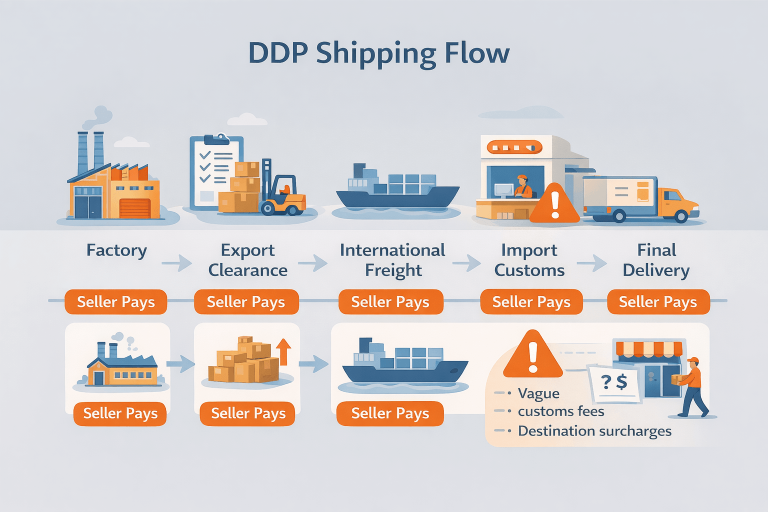
How to use Alibaba Trade Assurance when a supplier ghosts or extorts
Trade Assurance is useful, but it is not magic. It does not create strong terms for you. It helps enforce the terms that are already in the order.
That distinction matters.
What Trade Assurance is good at
Trade Assurance is strongest when you can show one of these clearly:
- the supplier missed the shipping deadline,
- the goods do not match documented quality requirements,
- the order was not shipped,
- or the delivered goods are defective, incorrect, or materially different from the contract.
What Trade Assurance is weaker at
Trade Assurance is weaker when:
- the contract language is vague,
- quality standards were never defined,
- the dispute is about verbal promises only,
- or you moved key decisions outside Alibaba.
The same practical point applies here: Trade Assurance is a back-end protection tool, not a substitute for clear specs, inspections, and clean documentation.
If the supplier ghosts you
Take these steps:
- Keep every message inside Alibaba if possible.
- Screenshot or export the shipping date, terms, and payment trail.
- Do not confirm receipt unless the order has actually been received and checked.
- Open a dispute as soon as the missed deadline or contract breach becomes clear.
- Upload evidence in a structured way: contract terms, timeline, supplier messages, and any freight change demands.
If the supplier pressures you for more money
Treat it as a contract issue first, not an emotional issue.
Ask the supplier one direct question:
Are you refusing to ship under the existing order terms unless I pay additional money?
If the answer is yes, or effectively yes, you now have a cleaner record for dispute.
According to Alibaba’s Trade Assurance materials, buyers can open disputes once payment is complete if shipping time or product quality fails to meet the contract, and Alibaba decides based on the evidence submitted by both sides.
That means your goal is not to write the longest complaint. Your goal is to create the clearest evidence trail.
Step-by-step guide to standing your ground against “crying emoji” guilt-tripping
Many buyers lose leverage because they confuse politeness with obligation. Suppliers know this. A message full of sad emojis, “boss please understand,” or “we are losing money on this order” may be emotionally effective, but it does not change the contract.
Here is the practical framework.
Step 1: Stop reacting to tone
Read the message once for facts only. Ignore apology language, urgency, and guilt framing.
Pull out the concrete claim:
- Is the supplier saying they cannot ship?
- Are they asking for more freight money?
- Are they asking you to cancel?
- Are they asking to move off-platform?
Step 2: Force the issue into writing
Reply with a short, neutral message like this:
Please confirm in Alibaba whether you will ship under the original order terms. If you need a change, provide the full cost breakdown and submit the amendment inside the order.
This does two things:
- it removes emotion,
- and it creates a usable record.
Step 3: Do not volunteer the wrong cancellation reason
If they want cancellation, ask them to initiate it and state the actual reason. Do not select “No Longer Needed” just to end the conversation.
Step 4: Ask for proof, not promises
If the issue is freight, ask for:
- updated quote,
- carrier or forwarder detail,
- package weight and dimensions,
- destination charges,
- and the exact Incoterm scope.
If the issue is production delay, ask for:
- revised ship date,
- production status,
- and whether the supplier is agreeing to amend the contract inside Alibaba.
Step 5: Set a hard path forward
Give two options only:
- honor the original order terms, or
- revise the order inside Alibaba with full documentation.
If they do neither, move to dispute.
Step 6: Protect your leverage until the end
Do not release final confirmation early. Do not pay extra money privately. Do not accept vague “trust me” fixes.
If you are still unsure whether the freight number itself is inflated, this guide on Alibaba shipping costs helps you sanity-check what should normally be inside the quote.
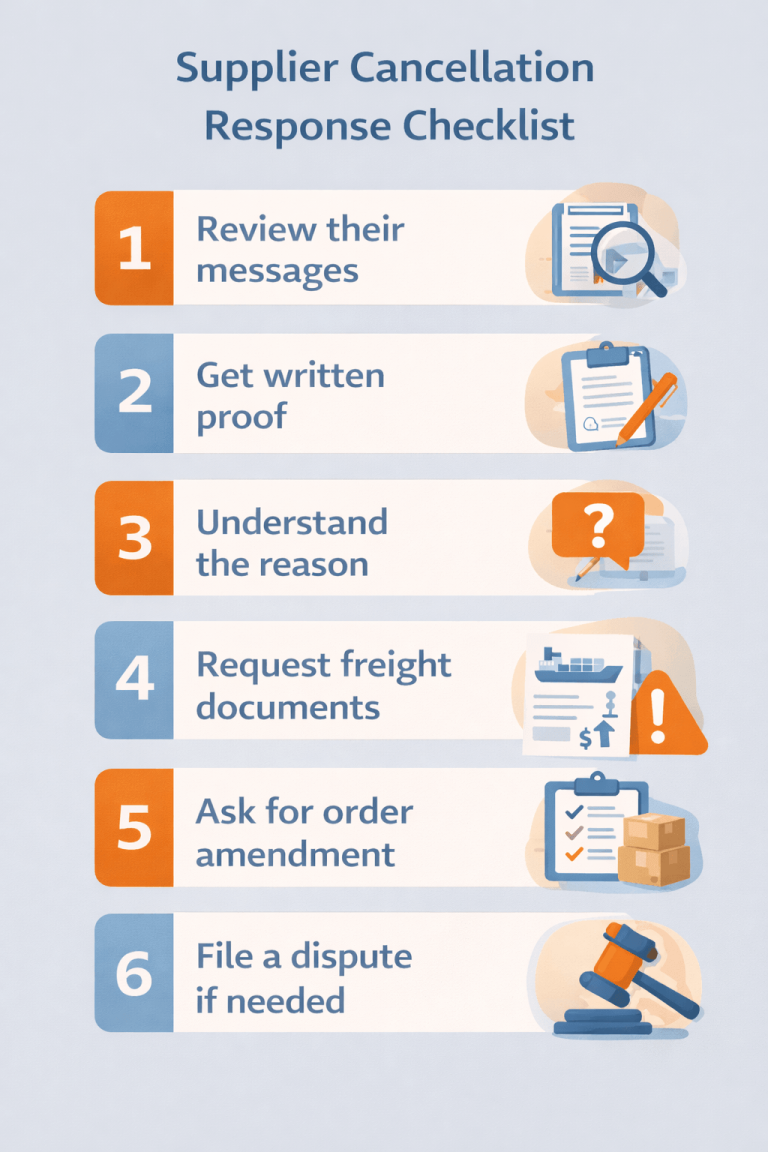
A quick decision framework: scam, mistake, or pressure tactic?
Here is the simplest way to judge the situation.
Supplier behavior | Most likely reading | What you should do |
|---|---|---|
Explains the issue clearly and provides a line-item freight breakdown | Possible genuine mistake | Review documents and amend only inside Alibaba |
Refuses to ship unless you pay more, but avoids written detail | Pressure tactic | Ask for written confirmation, then prepare dispute |
Asks you to cancel using a buyer-side reason like “No Longer Needed” | Protection dodge | Refuse the wording and keep the record accurate |
Pushes payment off-platform or asks for private transfer | High-risk behavior | Do not pay outside Alibaba |
Goes silent after payment or after you ask for proof | Escalating risk | Gather evidence and open dispute |
The important point is this: you do not need to prove criminal intent before protecting yourself. You only need to recognize when the supplier is trying to change the deal after the fact.
FAQ
Should I cancel an Alibaba order if the supplier asks me to?
Usually, no. Do not cancel automatically. First ask why, request written proof, and keep the discussion inside Alibaba. If the supplier failed to ship or changed the deal after payment, canceling too quickly can weaken your record.
Why does an Alibaba supplier want me to cancel the order instead of canceling it themselves?
Usually because a buyer-initiated cancellation can create a cleaner record for the supplier. If the supplier is late, changing the price, or unwilling to ship, they may prefer that you end the order voluntarily rather than force the platform to review their failure.
What cancellation reason should I choose on Alibaba?
Do not choose a reason that misstates what happened. If the supplier failed to perform, do not frame it as “No Longer Needed” or another buyer-choice reason just to make the process easier for them. Ask the supplier to submit the real reason or keep the order open while you prepare evidence.
What if the supplier asks for extra freight after I paid?
Ask for a written freight breakdown, the shipping term used in the order, and proof of what changed. If the supplier refuses to document the change and only pressures you to pay more, treat it as a risk signal.
Can I dispute an Alibaba order if the supplier asks for more shipping money?
Potentially, yes, if the supplier is refusing to ship under the agreed order terms or is breaching the contract in another documented way. Trade Assurance disputes depend on the written order terms, shipping deadline, and the evidence you can upload.
What proof should I ask for before agreeing to any change?
Ask for the updated freight quote, the new dimensions or weight if relevant, the exact surcharge detail, the applicable Incoterm, and a clear explanation of what changed from the original order.
Is an Alibaba supplier asking for more shipping money always a scam?
No. It can be legitimate if the shipment scope changed or the original freight assumptions were wrong. But it is a red flag when the supplier cannot provide a clear breakdown or insists on canceling the original order instead of updating the terms inside Alibaba.
How do I get an Alibaba refund without losing money?
Keep all payments and changes inside Alibaba, do not confirm receipt early, document the original contract terms, and open a Trade Assurance dispute when the supplier misses the ship date or breaches the quality terms. Clear written evidence matters more than emotional chat history.
Is Alibaba Trade Assurance better than a chargeback?
Trade Assurance is the first line of protection for platform orders because it is built around the contract and shipment record inside Alibaba. A chargeback may still matter in some payment situations, but it is outside the order workflow and can be less precise for product-quality disputes. In most cases, buyers should preserve their Trade Assurance position first rather than weaken it by canceling carelessly.
Is DDP shipping actually door to door?
It should be. Under DDP, the seller is supposed to handle transport, duties, taxes, and import formalities through delivery to the named place. But buyers should still verify what the supplier means by DDP, because some sellers use the label loosely while excluding destination charges or later asking for freight top-ups.
Conclusion
When an Alibaba supplier asks you to cancel an order, the real question is not whether the message sounds sincere. The real question is whether the supplier is trying to shift fault, reopen pricing, or escape a documented obligation.
The safest approach is straightforward: keep everything on-platform, never choose a cancellation reason that misstates what happened, demand written proof for any additional freight request, and use Trade Assurance as an evidence-based dispute process rather than a trust exercise. If the supplier made a real mistake, they should be able to document it. If they cannot, you should protect the order instead of protecting their story.