The best AliExpress alternative depends on what you want to fix.
If you are buying one inexpensive item for yourself, Temu, Banggood, DHgate, SHEIN, Amazon, or eBay may be the closest fit. If you run a store, the more useful options are CJdropshipping, Spocket, SaleHoo, Alibaba.com, 1688 with sourcing support, Printful, or a managed sourcing and fulfillment company.
That is the short answer. The part many comparison pages skip is that these businesses do different jobs. A retail marketplace, a supplier directory, a print-on-demand network, and a sourcing agent cannot be ranked fairly on one generic “best” list.
This guide compares 12 alternatives by use case, order size, shipping basis, business permission, automation, quality control, and room to scale. It does not assume that the lowest listing price is the lowest real cost.
Disclosure: Fulfillbot publishes this guide and provides sourcing, dropshipping, private-label, and order-fulfillment services. We include managed sourcing as one option for established sellers whose operational needs have outgrown marketplace ordering. We do not place it above consumer marketplaces for casual shopping or early product tests.
Quick picks: which AliExpress alternative fits your situation?
| Your situation | Best options to compare first | Why |
|---|---|---|
| Low-cost personal shopping | Temu, DHgate | Easy single-item buying, but check local terms, seller quality, and returns |
| Electronics and hobby products | Banggood | Focused catalog and an official dropship program |
| Fashion shopping | SHEIN | Fashion-first catalog; weak fit for general sourcing |
| Faster local delivery and simpler returns | Amazon or eBay | More local stock in many markets, usually at a higher price |
| Small wholesale orders | DHgate, Alibaba.com Ready to Ship | Better fit for quantity pricing than a typical retail listing |
| General dropshipping | CJdropshipping, Spocket, Banggood | Store connections and fulfillment workflows vary by platform |
| Supplier research | SaleHoo | Paid directory rather than an open retail marketplace |
| Bulk buying and customization | Alibaba.com | Built for supplier discussion, quotations, specifications, and larger orders |
| Deeper access to China wholesale supply | 1688 with a buying or sourcing agent | Domestic-market pricing with more operational work |
| Custom print-on-demand products | Printful | Products are made after the customer orders |
| Private label and repeat fulfillment | A managed sourcing and fulfillment company | Supplier coordination, inspection, packaging, warehousing, and shipping under one workflow |
How we compared sites like AliExpress
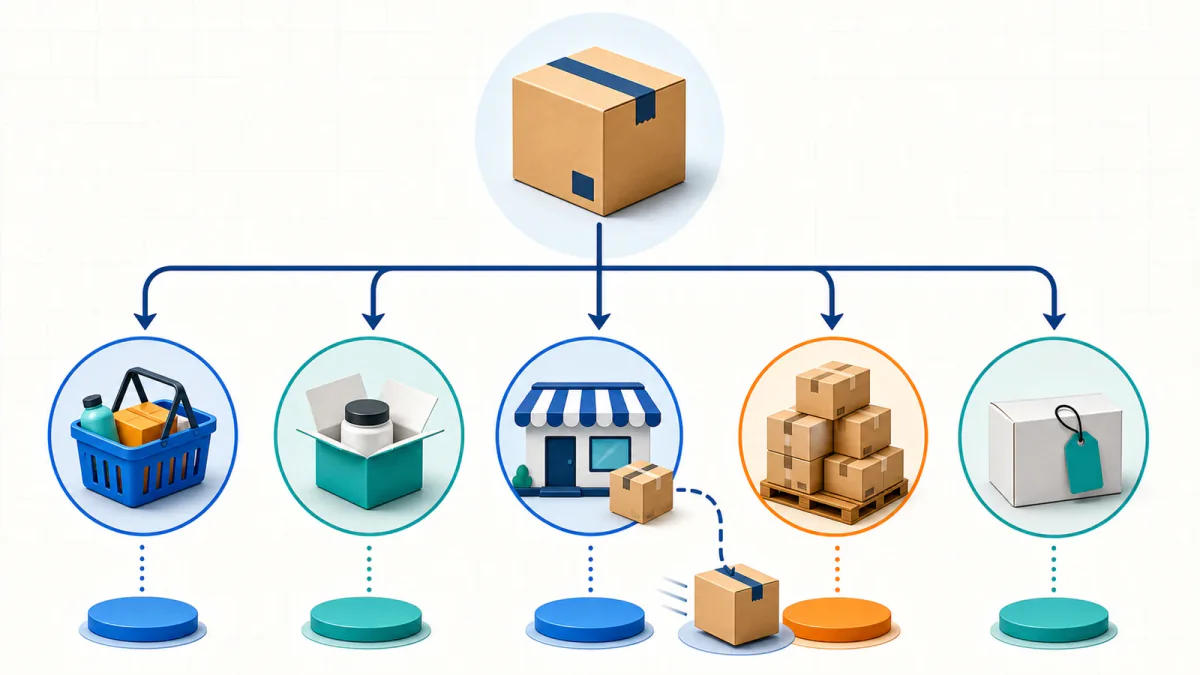
A useful comparison starts with the complete order, not the number next to the Buy button. We used seven criteria:
- Product cost plus shipping, tax, duty, and service fees
- Catalog fit
- Minimum order quantity, or MOQ
- Stock origin and destination-specific delivery options
- Buyer protection, returns, and dispute practicality
- Store integrations, inventory sync, and order automation
- Control over specifications, inspection, packaging, and branding
Research for this article was reviewed on July 25, 2026. We checked official platform pages and terms where they were available, current Fulfillbot topic pages, and the live search results for the main keyword cluster.
We did not place a test order on every platform. Shipping, product quality, stock location, and after-sales support can vary by seller and SKU, so the guide avoids one-size-fits-all delivery promises and platform-wide quality guarantees.
Why people look for an AliExpress alternative
AliExpress still works for many low-cost, low-risk purchases. The trouble starts when a buyer expects every seller to provide the same product quality, processing time, packaging, and return experience.
For personal shoppers, the usual pain points are slow or uncertain delivery, confusing product variations, hard-to-use returns, and listings that do not match expectations. Our guide to buying safely on AliExpress explains why the platform can be legitimate while an individual listing is still a poor bet.
Store owners run into a different ceiling. One order may contain products from several sellers, each with separate tracking and packaging. Inventory and prices can move without warning. Custom inserts, inspection standards, and unified fulfillment are difficult to manage across unrelated marketplace sellers. See the detailed breakdown of AliExpress shipping times and options before promising a delivery window to customers.
Import costs now deserve more attention too. U.S. duty-free de minimis treatment for covered low-value shipments was suspended, and current charges depend on the product, origin, value, route, and rules in force when the parcel enters. The White House order dated February 20, 2026 and CBP guidance are the primary references. Fulfillbot’s AliExpress tariff guide for U.S. buyers translates that policy into a checkout checklist. This is general information, not customs or tax advice.
There is also a current regulatory reason to avoid blanket safety claims. On July 20, 2026, the European Commission fined AliExpress €550 million over Digital Services Act failures involving risks from illegal, unsafe, or counterfeit products. That decision does not mean every product or seller is unsafe. It does mean “the platform is legitimate” is not enough due diligence for higher-risk products.
Changing websites will not remove supplier risk. The better move is to choose a model that matches the order, then check the exact seller, product, payment route, warehouse, and return terms.
Best AliExpress alternatives for personal shopping
These options are the closest fit when you want one item or a small personal order. They are not automatically good business suppliers.
1. Temu: convenient for personal shopping, weak for default dropshipping
Temu is an obvious AliExpress alternative for low-priced consumer goods. It has a broad catalog and a familiar retail checkout in the markets where it operates.
The catch is commercial use. Temu’s terms vary by country. The current Temu Canada Terms of Use, for example, say purchases are for personal or gift use rather than resale and restrict commercial use unless Temu permits it. A shopper can still compare Temu with AliExpress. A dropshipper should not build a store workflow around it without checking the terms for the exact country and account.
Temu makes the most sense for low-cost personal purchases. Skip it when the job involves supplier negotiation, private label, or a repeat dropshipping workflow. Before paying, read the local terms and return policy, then check the final cost and dispatch country for the exact item.
2. Banggood: a stronger fit for electronics and hobby products
Banggood is worth checking for electronics, tools, radio-control products, gadgets, and hobby categories. It also has an official dropship program that describes product publishing, order forwarding, packages without Banggood information, API access, and inventory or price updates.
That program makes Banggood more business-friendly than a marketplace that only supports retail checkout. It still does not guarantee that every item is stocked near your customer or that every category is equally strong.
Start with Banggood when the category is electronics or hobby gear and a formal dropship route would be useful. Look elsewhere for deep factory negotiation or a highly customized product. At SKU level, verify the warehouse, delivery estimate, return location, electrical certification, API requirements, and stock-sync behavior.
3. DHgate: useful for single units and small wholesale lots
DHgate sits between retail buying and small wholesale. Many listings use quantity tiers, which can make it practical for samples, small lots, and products that are awkward to source one unit at a time elsewhere.
The seller still matters more than the homepage. Brand-name products at implausibly low prices deserve extra caution. Product photos, seller history, recent reviews, payment protection, and dispute terms all need checking. Fulfillbot’s guide to assessing whether DHgate is legitimate covers those checks in more detail.
DHgate is strongest for samples and small wholesale quantities. It is a weak choice when brand authenticity or uniform supplier performance is non-negotiable. Check seller history, review photos, specifications, IP risk, protected payment, and the return address before ordering.
4. SHEIN: a narrow but useful fashion alternative
SHEIN is a fashion retailer, not a broad factory-sourcing marketplace. It can be a practical AliExpress alternative for clothing and accessories when the buyer cares more about a fashion-focused catalog than general product variety.
Sizing, material composition, regional availability, return rules, and product compliance still need item-level checks. It is also a poor substitute for supplier communication, factory customization, or general dropshipping automation.
Use SHEIN for fashion-first personal shopping, not for general merchandise sourcing or factory negotiation. Size charts, fabric details, customer photos, regional returns, and the final delivered price matter more than the headline discount.
5. Amazon or eBay: better when local delivery matters most
Amazon and eBay are not always cheaper than AliExpress. They can be better when the same or a comparable item is already held by a seller in your country.
That local route may give you faster delivery, a domestic return address, and familiar payment protection. The higher listing price can still be the lower-risk choice once return shipping, customs friction, and delay are included.
This route suits time-sensitive purchases, local stock, used or refurbished goods, and orders where a domestic return address matters. It does not offer factory pricing or much customization. Check the actual seller, dispatch location, item condition, delivery promise, and return policy. “Available on Amazon” does not always mean “sold or fulfilled by Amazon.”
Best AliExpress alternatives for dropshipping
Dropshipping alternatives should be compared by how they operate, rather than only by catalog size. The useful questions are whether the tool can sync stock, route orders, provide tracking, control packaging, and handle exceptions without forcing you to message a different seller each time.
6. CJdropshipping: integrated sourcing and fulfillment
CJdropshipping combines product sourcing, store connections, inventory, packaging, warehousing, and fulfillment. Its official 3PL page says merchants can send supplier inventory to CJ warehouses, connect stores, pre-stock products, customize packaging, and use inspection workflows.
This is a different model from browsing an open marketplace. It can reduce the number of operational handoffs, but each SKU still has its own stock location, shipping route, cost, and eligibility. CJ’s service-fee page contains detailed warehouse and processing charges that can change, so calculate costs using the current quote rather than copying a number from a comparison article.
CJ is worth comparing when you want sourcing, inventory, packaging, and fulfillment in one system. It is a poor fit if you expect every product to have local stock or assume operational services are free. Before joining, test store compatibility, warehouse availability, current fees, sourcing response, inspection scope, return handling, and delivery quotes for your target country.
7. Spocket: a regional-supplier route for US and EU stores
Spocket connects retailers with suppliers in the US, Europe, and other regions. It focuses on product import, inventory and order sync, and local or regional fulfillment options. Spocket’s supplier page describes Shopify integration and automatic product, inventory, and order syncing.
Spocket also says it reviews suppliers before onboarding them. That is useful screening, but “vetted” is not a promise that every product will match your store’s standard. Order a sample anyway. Its branded-invoice help page also notes that branded invoicing is not available from every supplier.
Spocket can suit stores that prefer US or EU supplier options and want platform integrations. Sellers chasing the lowest China-direct unit price will probably find it less attractive. Check the supplier and stock locations separately, then review the SKU shipping estimate, sample quality, subscription limits, branded-invoice eligibility, and returns.
Banggood’s dropship program: a simple marketplace-to-store workflow
Banggood appears twice in this guide because it serves two distinct jobs. Shoppers can buy from its retail catalog, while sellers can apply for its dropship program.
The official workflow is fairly direct: list a Banggood product, receive an order, place or forward the order, and have it shipped to the customer without Banggood information on the parcel. API and CSV tools can reduce manual work.
The trade-off is control. You are still working from a platform catalog. Private-label options, specifications, inspection, and supplier negotiation are more limited than in a managed sourcing relationship.
This is a practical extension for sellers already considering Banggood’s electronics or hobby catalog. It does not count as a separate alternative in our list of 12, and it remains a weak fit for private-label products or businesses that need factory-level control.
8. SaleHoo: paid supplier research rather than open shopping
SaleHoo is a supplier directory and research product. You pay for access, search its supplier database, then contact suitable wholesalers, manufacturers, or dropshippers.
That extra step is the point. SaleHoo’s official directory page describes filters for supplier type, location, and MOQ. Current plans and limits are listed on its pricing page. Prices and inclusions can change, so check them on the day you subscribe.
SaleHoo may save research time, but it is not an AliExpress-style catalog where every product can be bought immediately. A directory screens candidates; it does not remove the need for samples, written specifications, and protected payment.
SaleHoo works best for beginners who prefer a paid research workflow and want supplier contact details. It will frustrate anyone expecting free retail browsing and instant checkout. Before subscribing, confirm the current plan, refund terms, category coverage, store integrations, contact limits, and whether suitable suppliers ship to your customers.
Best alternatives for wholesale, private label, and scaling
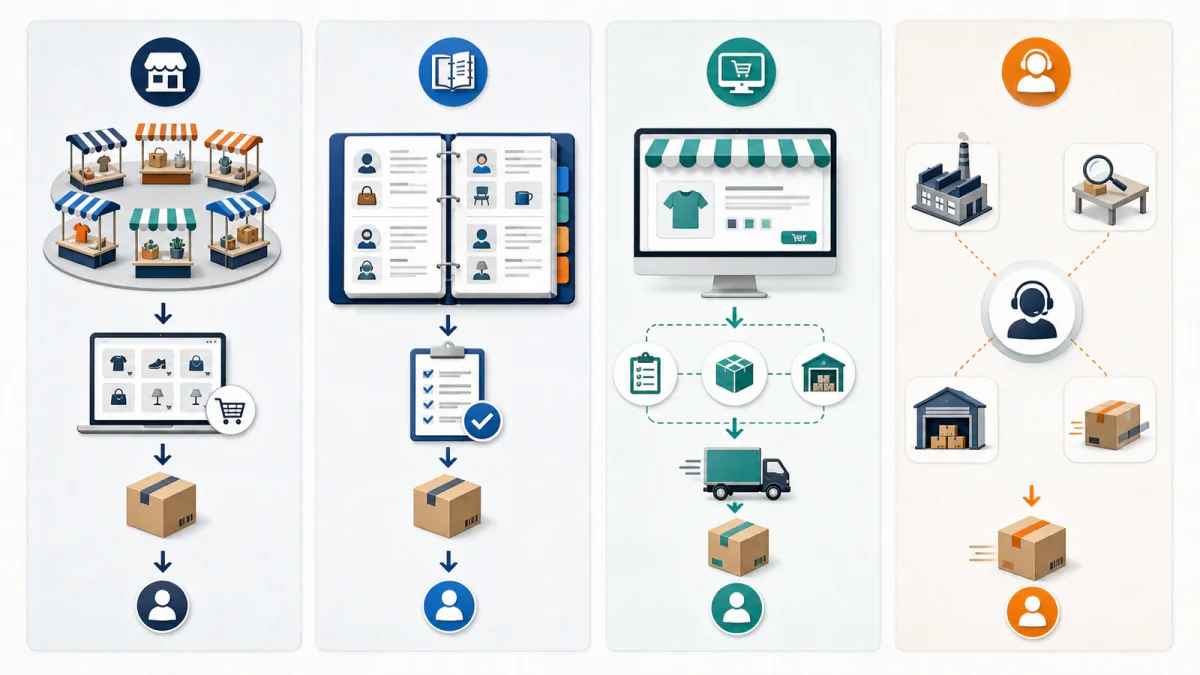
Once a product is selling repeatedly, the question changes. You are no longer looking for another retail listing. You need stable specifications, repeatable production, inspection, inventory planning, packaging, and a delivery process that can survive more volume.
9. Alibaba.com: built for bulk orders and customization
Alibaba.com is a global B2B marketplace. Alibaba Group describes it as a platform for business-to-business ecommerce, while Alibaba.com’s official sourcing workflow covers supplier search, RFQs, direct communication, customization, samples, purchase orders, payment, and logistics.
That makes Alibaba.com a better AliExpress alternative for wholesale and private label. It is less convenient for buying one cheap item. Supplier badges are useful signals, but they are not substitutes for a sample or a detailed order agreement.
Trade Assurance applies to eligible online orders paid through Alibaba.com and relies on the product quality and ship-date terms written into the order. Keep important communication and specifications on-platform if you expect the protection to apply. Fulfillbot’s Alibaba vs. AliExpress comparison explains the practical differences between the two buying models.
Alibaba.com is the natural step up for wholesale, negotiation, custom packaging, and private label. It is needlessly complicated for a casual single-item purchase. Before paying, verify the business identity, factory or trading-company status, sample, MOQ, specification sheet, tooling ownership, inspection terms, Incoterms, production schedule, and the exact Trade Assurance order.
10. 1688 with a buying or sourcing agent: deeper China-market access
1688 is designed mainly for China’s domestic wholesale market. Its listings can look cheaper than AliExpress, but an international buyer may need help with Chinese-language communication, local payments, domestic shipping, consolidation, inspection, export paperwork, and international freight.
That service layer changes the cost. Compare the delivered result, not the 1688 listing price. Fulfillbot’s 1688 review for international buyers explains why a low domestic price can be offset by agent fees, China-side logistics, rejected stock, repacking, and export delivery.
1688 is most useful once demand is proven and access to China’s domestic wholesale market is worth the extra work. For a one-off personal order, service and shipping costs can erase the listing-price advantage. Build the comparison around supplier type, domestic freight, agent fee, payment route, samples, inspection, consolidation, export shipping, and after-sales responsibility.
11. Printful: made-to-order products with your design
Printful is a print-on-demand fulfillment service. You create a product with your design, publish it to a connected store, and Printful produces, packs, and ships it after a customer orders. Its official help center explains that no conventional stock purchase is required before the sale.
This is a strong AliExpress alternative when the product itself should be custom. It is not a general source for electronics, household gadgets, or factory catalog products. Costs depend on the base product, print method, shipping destination, and optional branding.
Printful is a good fit for custom apparel, accessories, and other print-on-demand products. It is not a general-product sourcing marketplace. Before launch, check regional availability, a physical sample, the production estimate, shipping cost, return handling, store integration, and which branding options apply to that product.
12. A managed sourcing and fulfillment company: useful when operations become the bottleneck
A managed service is an operational alternative rather than another shopping website. It becomes relevant when a seller is juggling several suppliers, needs inspection before dispatch, wants custom packaging, or needs inventory consolidated into one fulfillment workflow.
For example, Fulfillbot’s China sourcing service is intended for supplier discovery, quotation, samples, and factory coordination. Its dropshipping service covers a different need: sourcing and fulfilling individual customer orders. Sellers with stock can instead look at ecommerce order fulfillment, while established products may fit private-label and custom-packaging support.
This model is not for someone buying a phone case for personal use. It is also not automatically cheaper. The value comes from reducing handoffs and gaining more control over the supply chain. Ask for a written fee structure, service boundaries, inspection standard, shipping options, and exception process before committing to any agent, including Fulfillbot.
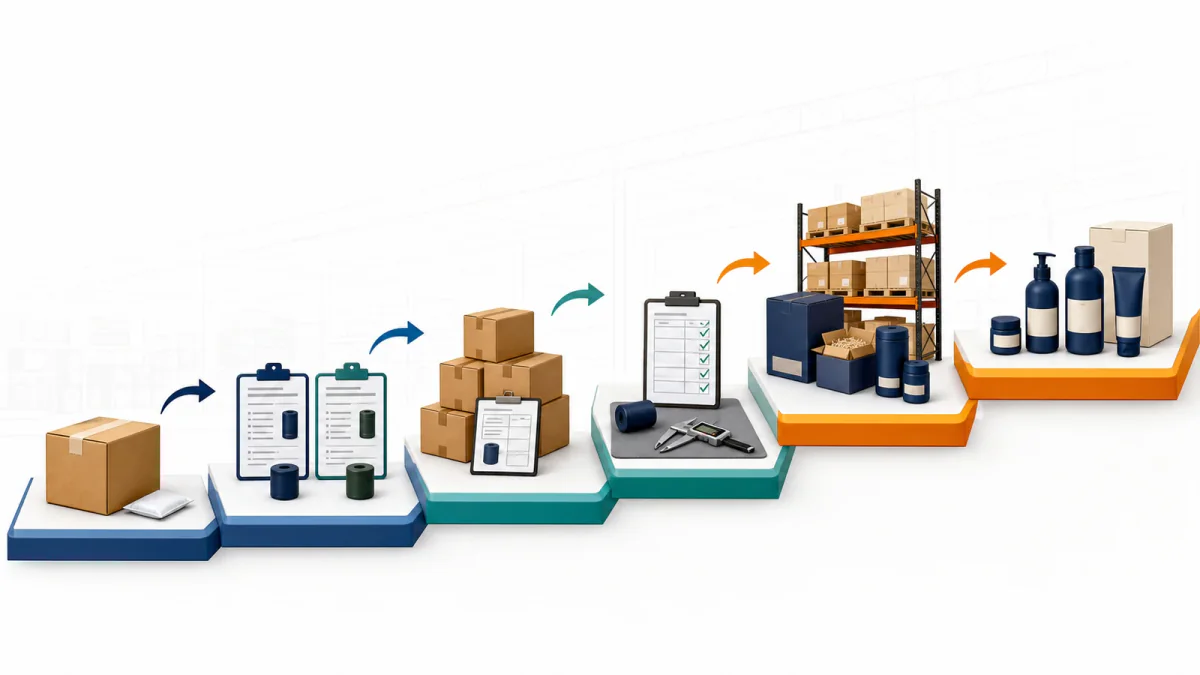
AliExpress alternatives compared
The table below compares the operating model. It does not promise a universal price or shipping time because those values change by item, seller, stock location, destination, and date.
| Alternative | Model | Best for | Typical order size | Shipping basis | Main trade-off |
|---|---|---|---|---|---|
| Temu | Consumer marketplace | Personal shopping | Single items | Platform and seller network; varies by market | Country terms may restrict resale or commercial use |
| Banggood | Retail marketplace plus dropship program | Electronics, hobbies, basic dropshipping | Single units to small orders | Item and warehouse specific | Less factory-level control |
| DHgate | Marketplace with retail and quantity tiers | Samples and small wholesale | Single units to small lots | Seller and item specific | Seller quality and IP risk vary |
| SHEIN | Fashion retailer | Apparel and accessories | Personal orders | Region and item specific | Narrow category and weak sourcing control |
| Amazon / eBay | Local and international marketplaces | Local stock, quicker returns | Single units | Seller and fulfillment route specific | Often costs more than China-direct buying |
| CJdropshipping | Integrated sourcing and fulfillment platform | General dropshipping | Single-order fulfillment; optional stock | Warehouse and shipping-line specific | Fees and availability must be checked per SKU |
| Spocket | Supplier network and store integration | US/EU-oriented stores | Mostly individual customer orders | Supplier location and SKU specific | Subscription and supplier limitations |
| SaleHoo | Paid supplier directory and research tool | Supplier discovery | Depends on the chosen supplier | Supplier specific | Research access is paid; checkout is not marketplace-style |
| Alibaba.com | Global B2B marketplace | Bulk and customization | Samples to larger MOQs | Supplier, Incoterm, and route specific | More negotiation and due diligence |
| 1688 + agent | Domestic wholesale marketplace plus service layer | China wholesale access | Samples to bulk | China domestic leg plus export shipping | Language, payment, consolidation, and agent dependence |
| Printful | Print-on-demand production and fulfillment | Custom designed products | Made one order at a time | Product and fulfillment-location specific | Limited to its customizable catalog |
| Managed sourcing / fulfillment | Service relationship | Repeat sourcing, QC, branding, consolidation | Samples, batches, or repeat orders | Quoted by product and destination | Requires onboarding, clear scope, and service fees |
How to choose the right alternative
Start with your order, not with a favorite platform.
Are you buying for yourself or for resale?
Personal buyers usually need a trustworthy checkout, an acceptable delivery estimate, and a practical return route. Sellers also need permission for commercial use, stable inventory, margin, packaging, tracking, and a repeatable after-sales process.
Do you need one unit, a small lot, or a custom order?
AliExpress, Temu, Banggood, and local marketplaces make sense for one or a few units. DHgate can suit small lots. Alibaba.com and 1688 become more useful when you can handle samples, MOQ discussions, and freight. A managed agent becomes relevant when coordinating those pieces is the problem.
If a product has proven demand, compare the economics of buying in bulk from China rather than repeatedly paying retail-style unit prices.
Where is the stock?
A “US supplier” and a “US warehouse” are different claims. A supplier may be registered in one country and ship the item from another. Check the dispatch location for the exact SKU, then compare the delivery estimate to the customer postcode.
What happens when the order goes wrong?
Look for a usable return address, a deadline for disputes, proof requirements, refund exclusions, and responsibility for return shipping. A generous-looking policy is not very helpful if sending a low-cost product back across a border costs more than the item.
Do you need branding or inspection?
A branded invoice is not the same as branded packaging. A logo sticker is not the same as a private-label product made to a written specification. Define what you need: a neutral parcel, insert, custom box, product logo, custom material, compliance label, pre-shipment inspection, or all of them.
Run a five-step test before moving your store
No comparison article can tell you how one product will perform for your customer. A controlled sample order can.
- Choose one identical SKU, or the closest genuinely comparable product.
- Calculate delivered cost to a real destination, including fees and likely import charges.
- Place a sample order and record processing, packaging, tracking, delivery, and support.
- Inspect the product against a written specification rather than a vague impression.
- Ask one pre-sale question and one after-sale question to test response quality.
Use the same scorecard for AliExpress and every alternative. Suggested rows are product match, packaging, processing time, tracking quality, delivery result, communication, issue resolution, and automation accuracy. Fulfillbot’s guide to verifying an Alibaba supplier adds business-identity and factory checks for larger orders.
Red flags worth stopping for
- The seller requests payment outside the platform before trust has been established.
- The legal business name or contact information cannot be verified.
- Product photos and specifications contradict one another.
- A warehouse claim cannot be tied to the exact SKU.
- The supplier promises guaranteed delivery without naming the route and destination.
- A bulk supplier refuses to provide a sample.
- There is no written dispute or return process.
- An agent will not explain fees or which supplier actually makes the product.
When AliExpress is still the sensible choice
An alternative is useful only if it solves a real problem.
AliExpress may still be the simplest option for a cheap, low-risk personal item, a hard-to-find spare part, or an early product sample. It can also make sense when the same seller has a long record, the delivery window is acceptable, and you are not promising that item to a customer before testing it.
Switch when the current setup repeatedly fails a requirement you can name: delivered cost, shipping predictability, quality consistency, commercial-use permission, store automation, packaging control, supplier communication, or returns.
That test prevents a common mistake: moving to a more complicated service because it sounds professional, then discovering that the extra workflow adds cost without solving the original problem.
A practical migration path for growing sellers
Most stores do not need to jump from one AliExpress order straight into a large factory commitment. A safer path is gradual:
- Buy one sample from AliExpress or a similar marketplace.
- Request quotes and samples from two or three suppliers.
- Place a small batch with a written specification.
- Inspect before the balance ships when the order risk justifies it.
- Consolidate stock and packaging once several suppliers create operational drag.
- Move into private label or custom manufacturing only after demand is proven.
Alibaba.com, 1688 with support, and a China sourcing agent can all appear at different points in that path. The right time is when the added control is worth the added setup.
Frequently asked questions
What is the best alternative to AliExpress?
There is no universal winner. Temu and DHgate are close for low-cost personal shopping, Banggood is useful for electronics, CJdropshipping and Spocket suit different dropshipping workflows, Alibaba.com is stronger for bulk and customization, and 1688 with an agent can suit experienced China buyers.
Is there a US version of AliExpress?
There is no exact US equivalent with the same catalog and pricing model. Amazon, eBay, regional wholesalers, and US-supplier networks may provide domestic stock and easier returns, but usually at a higher product price.
Which site is cheaper than AliExpress?
No platform is always cheaper. Compare the same product’s delivered cost, including shipping, subscription fees, tax, duty, inspection, failed deliveries, and returns. A lower listing price can produce a higher total cost.
Which AliExpress alternative has faster shipping?
Options with stock near the customer can be faster. Amazon, eBay, Spocket suppliers, CJ warehouses, Banggood warehouses, and local wholesalers may offer regional stock, but the answer depends on the exact SKU and postcode.
Is DHgate better than AliExpress?
DHgate can be better for quantity tiers and small wholesale orders. AliExpress can be easier for single-item retail purchases. On both platforms, check the seller and listing rather than relying on the platform name.
Is Alibaba.com better than AliExpress?
Alibaba.com is better suited to bulk orders, negotiation, customization, and private label. AliExpress is easier for single products and early testing. Read the full Alibaba vs. AliExpress guide before choosing.
Is 1688 cheaper than AliExpress?
Some 1688 listing prices are lower, but an international buyer may also pay for domestic shipping, an agent, payment handling, consolidation, inspection, export paperwork, and international freight. Compare the landed cost.
Can I use Temu for dropshipping?
Do not assume so. Temu terms differ by market, and some country terms restrict purchases to personal or gift use and prohibit resale or other commercial use. Check the current terms for your country and obtain permission where required.
What is the best AliExpress alternative for dropshipping?
CJdropshipping is worth comparing when you want sourcing and fulfillment in one platform. Spocket may fit stores seeking US or EU supplier options. Banggood has an official dropship program, and SaleHoo is useful when you prefer a paid supplier directory. Test the exact product before moving live orders.
Are AliExpress alternatives safer?
Changing platforms does not guarantee safety. Risk depends on the seller, product category, payment route, compliance requirements, return process, and how well the delivered product matches its specification.
The bottom line
For personal shopping, start with Temu, Banggood, DHgate, SHEIN, Amazon, or eBay and compare the exact item. For dropshipping, compare the operating model behind CJdropshipping, Spocket, Banggood, and SaleHoo. For wholesale and private label, Alibaba.com, 1688 with sourcing support, Printful, or a managed service give you more control than another retail listing.
The useful decision is not “Which website beats AliExpress?” It is “Which option fixes my current failure without adding more cost and complexity than it removes?”
If a product is already selling and marketplace orders have become hard to control, Fulfillbot can help with supplier sourcing, samples, inspection, consolidation, custom packaging, and repeat fulfillment. Share the product, order volume, destination countries, and the problem you need to solve to request a scoped quote.