AliExpress tariff questions used to have a lazy answer: keep the package under $800 and forget about it. That answer is obsolete for U.S. buyers. Duty-free de minimis treatment has been suspended for covered low-value shipments, including parcels that once passed under the $800 threshold.
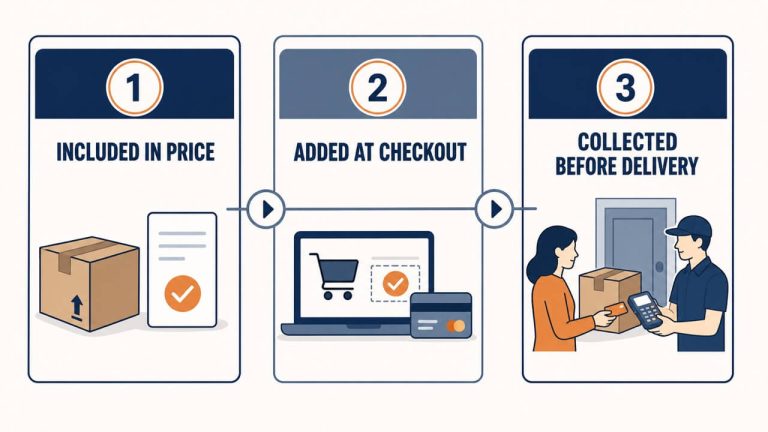
Here is the annoying part. There still is no single AliExpress tariff rate. The bill depends on the product, where it was made, its customs value, the trade measures in force when it enters and the route used to bring it into the country. The seller may fold the charge into the price. AliExpress may show it at checkout. A carrier may ask for payment before delivery.
So ignore the hunt for one magic percentage. Check the item, the final checkout breakdown and the shipping path.
Do you have to pay tariffs on AliExpress orders?
You may pay tariffs or other import charges on an AliExpress order without ever seeing a separate customs bill. A seller or logistics provider can build the charge into the product price. AliExpress may show an estimate during checkout. When neither happens, the carrier may collect duty and add a handling or brokerage fee before delivery.
The words on the order matter. A label such as “incl. import charges” is evidence about that order. It is not proof that every Choice item, every seller or every AliExpress shipping method uses the same customs arrangement.
This table is the fastest way to read the checkout:
| What you see | What it may mean | What to do |
|---|---|---|
Incl. import charges near the price | Import cost has been built into the displayed total for that order | Open the full order summary and save a screenshot |
A separate Import charges line at checkout | The platform or seller is collecting an estimated amount before shipment | Check whether the amount is described as estimated or final |
| Sales tax but no import-charge wording | State sales tax was collected; duty coverage is still unclear | Ask the seller and check the shipping method before paying |
Ships from United States | The parcel may already be in domestic inventory | Confirm the actual dispatch location and delivery estimate |
| Direct international courier with no import wording | A later duty or brokerage bill is possible | Check the courier’s terms and budget for a separate charge |
Tariff, sales tax and brokerage are different charges
AliExpress buyers often throw “tariff,” “tax,” “customs fee” and “import charge” into the same bucket. That is where a lot of bad advice starts.
A tariff or customs duty is a federal charge tied to importing goods. The rate can depend on the product’s tariff classification and origin. State sales tax is a separate consumption tax that may appear at checkout. U.S. Customs and Border Protection says it does not collect state sales tax on imports.
Brokerage or clearance fees are different again. A courier may prepare the customs entry, advance duty and bill the recipient for that work. Shipping cost is simply the price of moving the parcel. “Free shipping” does not mean “duty paid.”
The real cost looks more like this:
Product price + shipping + applicable duty/tariff + sales tax + carrier or brokerage fees = total order cost
On a cheap order, a fixed carrier fee can hurt more than the duty itself. A $20 item can turn into a lousy deal even when the tariff percentage looks modest.
For a broader look at parcel lines, couriers and commercial freight, read our guide to shipping from China to the USA.
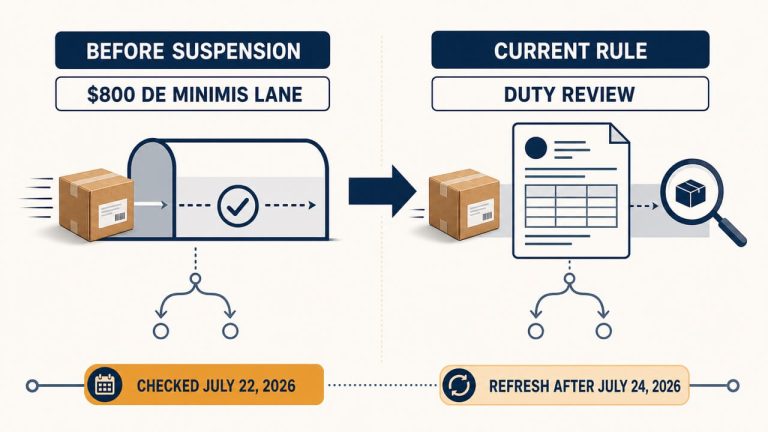
What happened to the $800 de minimis rule?
The old advice was easy: keep the package under $800 and it usually enters duty-free. That sentence is still sitting in articles published in 2026. It is wrong under the current rule.
The United States first suspended duty-free de minimis treatment for low-value goods from China and Hong Kong in May 2025. A later order extended the suspension to covered shipments from all countries. On February 20, 2026, Executive Order 14388 continued that suspension.
The order says the exemption does not apply to covered shipments regardless of value, country of origin, transport mode or entry method. Some statutory exceptions remain, but a normal buyer should not treat “$799 or less” as a safe rule.
Postal shipments and non-postal shipments do not use exactly the same process. Under the February order, international postal shipments temporarily use a special duty method. Other shipments are subject to applicable duties, taxes and fees and need an appropriate customs entry. The branded shipping name shown by AliExpress does not always tell you which customs path sits behind it, especially when one company handles the international leg and another handles final delivery.
A court ruling against one tariff authority did not automatically bring duty-free AliExpress parcels back. The de minimis suspension continued under a separate order, while the administration imposed a temporary surcharge under Section 122 of the Trade Act. The legal paperwork changed faster than the checkout experience did.
How much is the AliExpress tariff in the U.S.?
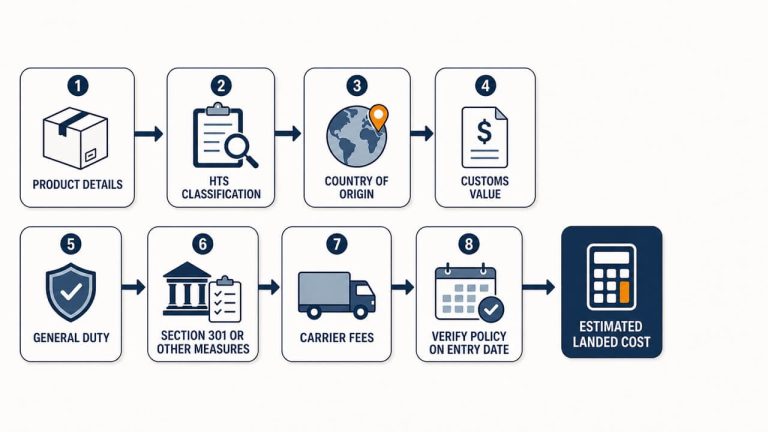
There is no honest one-number answer. A calculator that slaps 25%, 30% or another blanket rate on every AliExpress link is making an estimate. It is not classifying the import.
Before trusting any estimate, pin down four facts:
- What is the product made of, and what does it do?
- Where was it manufactured?
- What price was paid for the goods?
- Which trade measures apply when the shipment is entered?
Match the effort to the order. For a low-cost replacement cable, saving the checkout record may be enough. For a $900 machine part, classification, origin and importer responsibility deserve attention before money changes hands.
Find the HTS classification
The Harmonized Tariff Schedule of the United States, or HTSUS, assigns products to tariff classifications. Material, function, construction and use can change the code. A supplier’s code is a starting point, not a final U.S. customs decision.
Use the USITC Harmonized Tariff Schedule to inspect the general rate. If the product was made in China, use the USTR Section 301 product search to check whether the eight- or ten-digit HTS subheading is covered by an additional action or an exclusion.
Confirm origin and customs value
The seller’s location is not necessarily the product’s country of origin. A product sold by a Chinese storefront might have been made elsewhere, while a product sent from a third-country warehouse may still be Chinese-origin merchandise.
CBP’s current commercial-invoice guidance says the customs value generally starts with the price the U.S. buyer paid for the goods, subject to valuation rules and required additions. Asking a seller to write a fake value, use a false origin or choose a lower-duty code is not a savings trick. It is a bad customs declaration, and the importer can face the consequences.
Add current trade measures and fees
The general HTS rate is only one layer. Chinese-origin goods may also face Section 301 duties, and some products have other measures attached to them. The temporary Section 122 surcharge in effect on the research date has exceptions. It also does not stack with Section 232 tariffs in the same way as an ordinary additional duty.
For an expensive order or a product that is hard to classify, a licensed customs broker is cheaper than guessing. CBP can also issue binding classification rulings.
Are AliExpress tariffs included in the price?
Sometimes. The actual order is more useful than a confident forum answer.
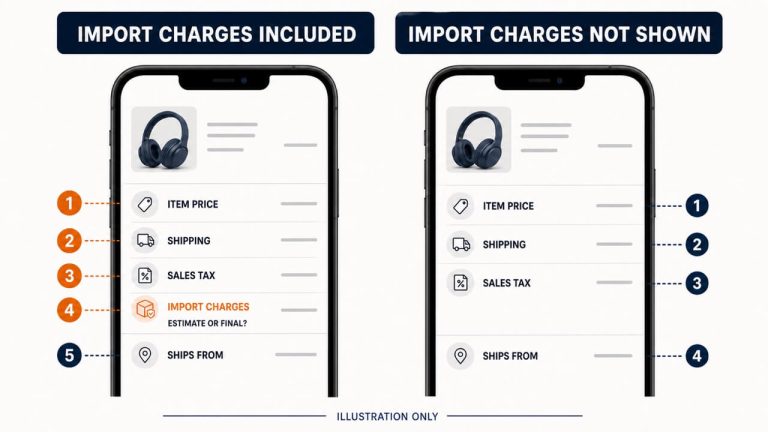
AliExpress’s help result says duties and taxes are typically not included in the item price and may not be included in the shipping cost. At the same time, U.S. buyers now see some listings and checkout screens that describe import charges as included or add an import-charge line before payment. Both can be true because sellers and shipping arrangements differ.
Before paying, open the full breakdown. Look for:
- the selected destination and
Ships fromlocation; - the product price after the U.S. destination is selected;
- shipping cost and service;
- sales tax;
- import charges or duties;
- language saying the amount is included, estimated or payable later.
Save the product page, cart and final order summary. If a carrier later asks for duty, those records give you something concrete to compare with the bill and any promise made by the seller.
Do not confuse buyer protection with customs protection. AliExpress may handle a dispute under its order rules, but that does not mean it will refund every government charge, carrier fee or refused-delivery cost. For seller, payment and counterfeit risk, see Is AliExpress safe?.
When could a carrier bill you after checkout?
A later bill can appear because duty was not prepaid, the checkout amount was only an estimate, customs changed the classification or value, or the carrier added a brokerage or clearance fee. Those are very different charges, even if the payment request bundles them together.
If a text or email asks for money, do not click first and investigate later. Open the carrier’s official website yourself, enter the tracking number and confirm that the request is real. Then ask what you are actually paying for:
- customs duty;
- a government processing fee;
- carrier brokerage or handling;
- storage or another service charge.
Compare the breakdown with your saved AliExpress order summary. If the order expressly said import charges were included, contact the seller and AliExpress with the documents. If the disagreement concerns HTS classification or customs value, the carrier, customs broker or CBP is the more relevant party.
Refusing delivery is not a clean reset button. The parcel may be returned, abandoned or charged additional handling. A seller may also dispute the refund. Read the current order and return terms before making that call.
Does a U.S. warehouse avoid tariffs?
A genuine domestic shipment usually avoids a customs bill at the buyer’s door because the goods have already entered the United States. The tariff did not vanish. The seller or another importer may have paid it earlier and buried the cost in the domestic price.
Confirm the dispatch origin after the order ships. Some marketplace listings use a domestic-looking delivery estimate even though inventory or routing changes. Tracking that begins inside the United States is useful evidence, though it does not explain who handled the earlier import.
The best comparison is still the final price at your door. A U.S.-warehouse item may cost more on the product page and less after shipping, duty risk and delivery time are considered.
Why shipment records matter more than buyer anecdotes
Buyer stories can show where confusion starts, but they cannot establish the duty treatment for your order. Two parcels that look similar may use different sellers, shipping services, customs entries or collection methods.
The useful questions are whether the checkout total was described as final, who acted as the importer and whether a carrier can collect money before delivery. The product page, order summary, tracking record and carrier invoice are stronger evidence than an undocumented account from another buyer.
If a policy changes after payment, do not assume that every customer automatically receives a refund. The answer depends on who remitted the duty, how the charge appeared in the transaction and whether a valid refund process applies.
The 60-second check before you pay
Run through this list before placing a U.S. AliExpress order:
- Confirm the selected destination and the product’s
Ships fromlocation. - Read the full checkout breakdown, not just the product-page price.
- Look for clear import-charge language.
- Note the international shipping service and possible courier handoff.
- Save the product page and order summary.
- For expensive or regulated goods, check HTS classification and admissibility.
- Compare the likely delivered cost with a domestic alternative.
Walk away if a seller asks you to declare a false value, use a false origin or split orders specifically to evade duty. Also be skeptical of a vague “tax-free” promise that does not explain who imports the goods and how duty is handled.
What tariffs mean for AliExpress dropshippers
AliExpress can still be useful for testing a product. Trouble starts when a store copies the product-page price into its cost sheet and calls the job done.
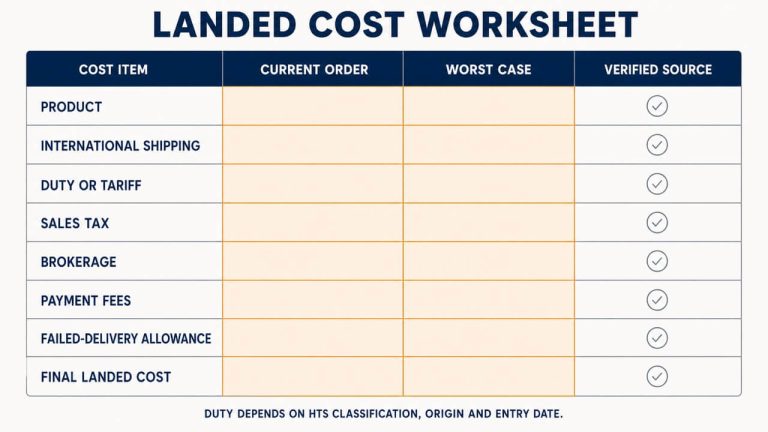
Use a fuller calculation:
Product + shipping + duty/tariff + sales tax + brokerage + payment fees + failed-delivery allowance = usable landed cost
Then decide who absorbs a change. Maybe it comes out of margin. Maybe the retail price goes up. Letting the customer discover the cost at delivery is the dangerous option. Customers do not care which company in the logistics chain caused the surprise charge. They remember the store that took their money.
Direct AliExpress fulfillment starts to lose its appeal when a product sells repeatedly, checkout costs move without warning, packaging matters or customer support keeps dealing with customs questions. At that point, compare AliExpress with Alibaba for larger orders and price a controlled sourcing and fulfillment setup.
For repeat U.S. orders, Fulfillbot can quote sourcing, QC, China warehousing and a documented parcel or bulk-shipping plan. The point is not a mythical tariff-free route. It is knowing the cost, customs responsibility and delivery process before the customer order arrives. See our dropshipping fulfillment service or China sourcing service.
Frequently asked questions
Do I have to pay tariffs on AliExpress orders under $800?
Do not assume the order is duty-free. The United States has suspended duty-free de minimis treatment for covered low-value shipments, including parcels that would once have qualified under the $800 threshold. The exact duty and collection method still depend on the product and shipment.
Are AliExpress tariffs included in the price?
They may be included, shown separately at checkout or collected later. Check the product page and full order summary for import-charge wording. A sales-tax line alone does not prove duty is covered.
What does “incl. import charges” mean?
It means the displayed order price represents import charges as included for that transaction. Save the checkout record and check whether the amount is described as an estimate. Do not treat the label as a guarantee for other sellers or future orders.
Is AliExpress Choice tariff-free?
No blanket rule makes Choice items tariff-free. Some Choice orders show included import charges, but you still need to inspect that order’s price breakdown and shipping details.
Can I avoid tariffs by splitting my order?
Do not split or undervalue shipments to evade duty. The old under-$800 strategy is obsolete under the current de minimis suspension, and false declarations can create penalties or seizure risk.
Will DHL, UPS or FedEx charge extra?
They can bill duty they advanced and add brokerage or handling charges, depending on the service and customs entry. Check the selected shipping terms before paying and verify any later payment request on the carrier’s official website.
Can I get an AliExpress tariff refund?
Not automatically. A customs refund depends on the entry record, the party that remitted the duty and the legal basis for a refund. A higher retail or checkout price does not by itself prove that the buyer has a direct refund claim against CBP or AliExpress.
Can I still order from AliExpress in the United States?
Yes. Check whether the product is admissible, calculate the delivered cost, read the import-charge wording and understand the shipping path before paying.
The bottom line
Stop looking for one AliExpress tariff percentage. There isn’t one.
For a U.S. order, ask four questions: What is the product? Where was it made? Does the checkout say import charges are included? How will the parcel enter the country?
Those answers will not make customs simple. They will tell you whether the cheap listing is still cheap by the time it reaches your door. That is the number worth checking before you click Pay now.