China is the world’s foremost manufacturer and exporter of consumer goods. That’s why you see countless products labeled “Made in China.” But this labeling has drawn negative responses from some consumers who associate it with inferior quality—a misconception that doesn’t reflect modern Chinese manufacturing capabilities.
To counter this perception, many manufacturers and global brands have adopted an alternative label: Made in PRC. This strategic shift raises important questions for consumers, importers, and business owners alike. Is “Made in PRC” the same as “Made in China”? What does it mean for product quality? This comprehensive guide answers every question about the “made in prc means” label, including critical legal compliance information that could save importers thousands in customs penalties.
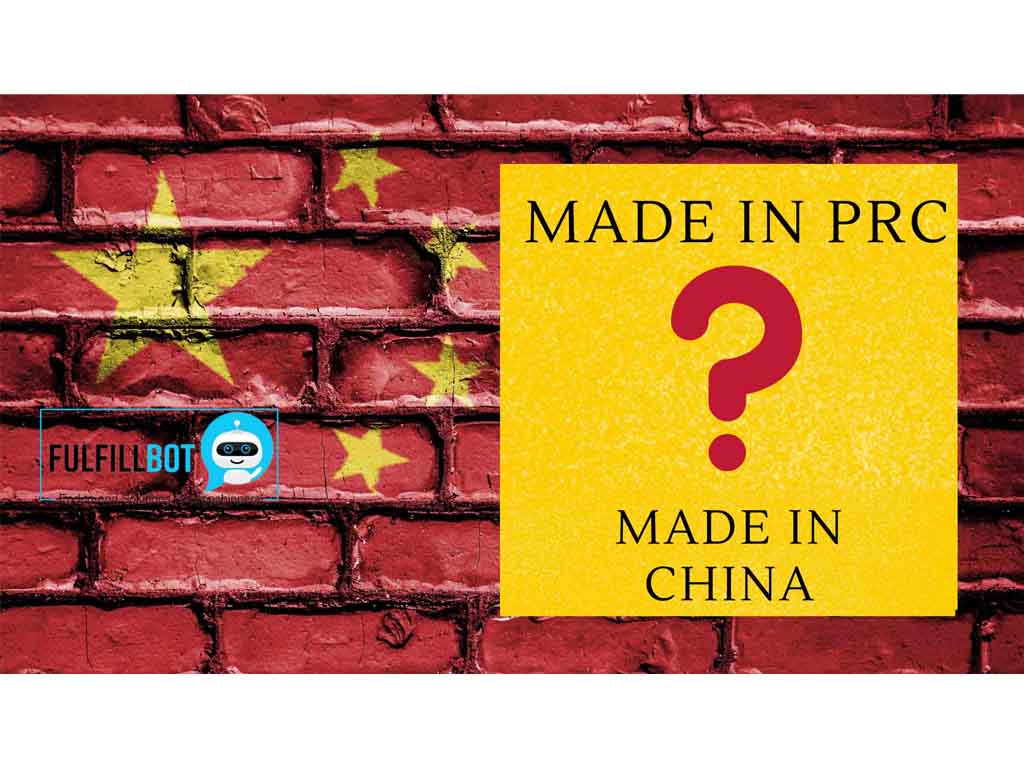
Table of Contents
ToggleWhat Does Made in PRC Mean?
PRC stands for the People’s Republic of China—the official name of mainland China established in 1949. When you see “Made in PRC” on a product label, it means the item was manufactured, assembled, or produced in China.
Some manufacturers also use variations like:
- PROC (People’s Republic of China)
- P.R. China
- China, P.R.
All of these indicate the same country of origin: mainland China.
The label appears on everything from power tools and electronics to clothing and household goods. Understanding what it means—and its legal implications—is essential for both consumers and businesses importing goods.
What Will Be the Country of Origin if the Product Is Made in PRC?
The term “PRC” creates confusion for many consumers, particularly when distinguishing between different Chinese territories. Here’s a clear breakdown:
People’s Republic of China (PRC) vs Republic of China (ROC)
| Territory | Abbreviation | Common Label | Government |
|---|---|---|---|
| Mainland China | PRC | Made in PRC / Made in China | People’s Republic of China |
| Taiwan | ROC | Made in Taiwan | Republic of China |
| Hong Kong | SAR | Made in Hong Kong | Special Administrative Region |
| Macau | SAR | Made in Macau | Special Administrative Region |
Critical Distinction: “Made in PRC” never refers to Taiwan. Products manufactured in Taiwan are labeled “Made in Taiwan” or occasionally “Made in ROC” (though “Taiwan” is the standard for international exports to avoid political complications).
When you see “Made in PRC” on a product, it specifically indicates manufacturing in mainland China—not Taiwan, Hong Kong, or Macau.
Made in PRC vs Made in China: What’s the Difference?
The short answer: geographically, they are identical. Both labels indicate products manufactured in mainland China.
The difference lies in perception and strategy:
| Aspect | Made in China | Made in PRC |
|---|---|---|
| Geographic Origin | Mainland China | Mainland China |
| Consumer Recognition | High (universally understood) | Lower (many don’t know PRC = China) |
| Perception | Often associated with low cost/quality | Appears more “official” or “technical” |
| Legal Status (USA) | ✅ Acceptable | ❌ Not acceptable for customs |
| Legal Status (EU) | ✅ Acceptable | ✅ Generally acceptable |
The products come from the exact same factories, made by the same workers, using the same processes. The only difference is the text on the label—a distinction that has significant marketing and legal implications.
Is Made in PRC Legal? A Country-by-Country Compliance Guide
This section is critical for importers and business owners. The legality of using “Made in PRC” varies dramatically by destination country, and getting it wrong can result in:
- Customs detention of goods
- Mandatory re-labeling at importer’s expense
- 10% marking duties (USA)
- Delayed shipments and missed deadlines
- Potential seizure of goods
United States: The “Made in PRC” Label Is NOT Legal
The U.S. Customs and Border Protection (CBP) has been unequivocal on this issue. Under 19 U.S.C. 1304, every article of foreign origin imported into the United States must be marked to indicate the country of origin to the “ultimate purchaser.”
Key CBP Rulings Rejecting “Made in PRC”
CBP Ruling HQ 560693 (1998) This landmark ruling explicitly states that “PRC” is not acceptable because it is an abbreviation that is not universally recognized by the average American consumer. The ruling establishes that origin marking must use terminology that “unmistakably identifies” the country to ordinary purchasers.
CBP Ruling HQ 562901 (2003) Reinforced the position that abbreviated or acronym-based origin markings do not satisfy the “conspicuous” and “legible” requirements of the marking statute when they fail to clearly communicate country of origin.
CBP Ruling N335478 (Recent) This recent ruling rejected “Made in PRC” on retail packaging, even when the box prominently featured other text like “Designed in France.” The ruling confirmed that such contextual information does not compensate for non-compliant origin marking.
Acceptable Origin Markings for US Imports
| ✅ Acceptable | ❌ Not Acceptable |
|---|---|
| China | PRC |
| Made in China | Made in PRC |
| P.R. China | PROC |
| China, P.R. | People’s Republic of China (too long/unclear) |
| Product of China |
Consequences for Non-Compliance
Goods marked “Made in PRC” arriving at US ports may be:
- Detained pending resolution
- Subject to 10% marking duty (additional cost on top of regular duties)
- Required to be re-labeled at the importer’s expense before release
- Refused entry in severe or repeat cases
Bottom Line for US Importers: Never use “Made in PRC” on products destined for the United States. Always use “China” or “Made in China.”
European Union: Generally Permissive
The EU takes a fundamentally different approach. For non-food industrial products, there is no single harmonized “Made in” regulation requiring specific origin marking language.
Key points for EU compliance:
- Origin marking is generally not mandatory for most consumer goods
- Manufacturers are free to label origin using reasonable terminology
- The primary requirement is that labels must not be “deceptive”
- Since “PRC” is the accurate official name, it is widely tolerated
Important Caveat: Individual EU member states may have specific requirements. Italy and France, in particular, have stricter rules around potentially misleading origin claims, especially when combined with flags or national symbols.
United Kingdom (Post-Brexit)
The UK follows similar principles to the EU:
- No mandatory origin marking for most products
- Labels must not be misleading
- “Made in PRC” is generally acceptable
- Enhanced scrutiny applies to claims that might suggest UK origin when goods are imported
Canada: “Made in PRC” Is Acceptable
The Canada Border Services Agency (CBSA) accepts “Made in PRC” as a valid indicator of Chinese origin. Canadian regulations focus on accuracy rather than specific terminology, making “PRC” a compliant option.
Australia: Acceptable If Not Misleading
Australian Consumer Law focuses on whether origin representations are misleading or deceptive. Since “PRC” is technically accurate:
- The label is generally acceptable
- It should not conflict with other claims (e.g., cannot be combined with “Product of Australia”)
- Safe harbor defenses apply to accurate origin claims
Summary: Global Compliance Quick Reference
| Country/Region | “Made in PRC” Legal? | Notes |
|---|---|---|
| United States | ❌ No | Use “China” or “Made in China” only |
| European Union | ✅ Yes | Must not be deceptive |
| United Kingdom | ✅ Yes | Post-Brexit rules similar to EU |
| Canada | ✅ Yes | CBSA accepts PRC |
| Australia | ✅ Yes | Must be accurate, not misleading |
Why Companies Switched From "Made in China" to "Made in PRC"
Made-in-China is a well-established tag. But everything in this goes through a transitional phase. Be it a brand name, product label, or tag!
In short, replacing the made-in-China label with Made in PRC is a part of the marketing strategy.
Even though the made-in-PRC tag is less known to buyers, it still works wonders. Let’s see how!
1.It Helps Manufacturers Include Official Name on Labels
How many of you know the official name of China? Well, it is the People’s Republic of China. And PRC is the short form of this official name.
Manufacturers used to label “Made in China” on their products for a long time. So, people then thought China was the official name of the country.
Manufacturers saw the need to switch to the “Made in PRC” tag. It helps them create awareness of the official name.
The change has positively been accepted. Buyers and people around the globe now recognize PRC as China’s official name.
2.It Helps Improve Sales
Due to claims of Chinese products being low quality, sales started to drop. Thus, manufacturers had to come up with a different marketing strategy.
They concluded on the changing of the labels. That’s because some buyers still avoid the “Made in China” products. But they choose the “Made in PRC” products.
This strategy proved to be working positively. At first, customers were confused. They didn’t know that both made in China and made in PRC products came from China.
Later on, some customers find out the similarity. While other customers still believe those two labels are for different countries.
3.The New Label Suits Foreign Companies
European companies with factories in China also use this method. A lot of their products got pushed aside until they changed the labeling.
It is a way to show consumers that the manufacturing region is in China, and the quality of the product is also good.
What Are the Reasons Behind the Rise of Made in PRC Products?
What companies want to set up their manufacturing plants? Of course, they need a decent ecosystem to produce goods and an established supply chain to export them.
Be it PRC or China, you will notice some unique qualities that attract companies to set up their plants in this region.
1.The Manufacturers Are Experienced and Knowledgeable
China has been producing and exporting products for the longest time. The Chinese people are known to be knowledgeable in manufacturing products. Their long stay in the industry has made them experts.
You are sure to find reliable manufacturers in China. Many of them specialize in the production of certain products.
Being experts with lots of experience makes them the most sought out manufacturers.
2.Political Stability
The People’s Republic of China is politically stable. There is no political unrest to hinder manufacturing.
Manufacturing is known to be the largest business in China. Political instability is avoided to lower the risk of losing business.
3.Great Logistics
The People’s Republic of China has built many roads, railways, and airports. It also has good ports.
What’s more, many logistics companies help transport the manufactured goods.
The People’s Republic of China has invested greatly in logistics. So, companies don’t face issues when shipping their products out of the country.
4.Cheap Labor
Cheap labor leads to low production costs. There is no shortage of easily available cheap labor in the People’s Republic of China. It is available due to the readily available workers.
Cheap labor means a cheap cost of production. Thus, it helps companies in cost-cutting. As a result, the final product value becomes less and also affordable.
Yet, this scenario is changing due to the rise in the cost of living. Cheap labor will soon start to decrease.
5.High Relocation Cost
Relocating a factory to China is cheap. Other countries offer alternatives like tax advantages, but they remain high.
The People’s Republic of China has lower tax rates than other countries. As a result, setting up a factory in the PRC becomes affordable. It is the reason you see many known brands with factories in China.
6.Business Ecosystem
The Business Ecosystem in China has improved a lot. It is a fast-growing economy. It has a network of suppliers, manufacturers, distributors, customers, and government agencies.
These groups play a huge role from the production of an item to it reaching the customer.
China is known to be a business-driven country. Getting products from there can yield good results.
7.Established Supply Chain
The People’s Republic of China has an established supply chain. This region has built a strong supply chain after spending years in the industry.
The manufacturers, suppliers, logistics service providers, and warehouse companies strengthen the supply chain.
So, these are a few reasons that attract many companies to set up their plants in PRC. Thus, there is no wonder why you see so many made in PRC products in the market.
Do need Sourcing Agent to Help You Buy from China?🛍️
👇👇👇👇👇👇
Brand Case Studies: Who Uses the “Made in PRC” Label?
Understanding which brands use “Made in PRC” and why provides valuable insight into global manufacturing and branding strategies.
Power Tools and Industrial Equipment
Makita, Bosch, Hitachi, DeWalt
Professional tool brands face a unique challenge. Their users—tradespeople and contractors—value durability and performance above all else. While these tools are manufactured in China to exacting German or Japanese engineering standards, the “Made in China” label carries a legacy association with “DIY/disposable” quality.
The “PRC” designation appears more technical and industrial, aligning better with “Pro” branding. You’ll commonly find “Made in PRC” on:
- Tool typeplates and specification labels
- Battery packs and chargers
- Replacement parts and accessories
These products meet identical quality standards whether labeled “China” or “PRC”—the choice is purely strategic.
Fashion and Apparel
Luxury Segment: Balmain, Burberry (select items)
Even luxury fashion houses source some products from Chinese manufacturers. For brands commanding premium prices, “Made in PRC” provides a subtle buffer that appears less discordant than “Made in China” on a $2,000 garment.
Fast Fashion: Zara, H&M, The North Face
These brands operate in the “Masstige” sector—mass-market production with aspirational positioning. Chinese manufacturing provides the cost structure that enables their business model, while “PRC” labeling offers a marginal perception advantage.
Note: Many of these brands use “Made in China” on products destined for the US market to ensure customs compliance.
Consumer Electronics
Sony, Samsung, Nintendo, Lenovo
Electronics manufacturers frequently use “Made in PRC” on:
- Batteries and power adapters
- Internal components and chargers
- Accessories and peripherals
- Region-specific product variants
The electronics industry’s global supply chains often mean final assembly occurs in one country while components come from multiple origins. “PRC” appears on components manufactured in China, even when the finished product is assembled elsewhere.
What This Means for Consumers
Seeing “Made in PRC” on a name-brand product:
- Does not indicate a counterfeit
- Does not suggest different quality than “Made in China” versions
- Reflects a marketing/labeling decision by the brand
- May indicate the product wasn’t originally intended for US distribution
Are Made-in-PRC Products Good Quality?
This is perhaps the most important question for consumers. The answer requires separating outdated stereotypes from modern manufacturing reality.
The Evolution of Chinese Manufacturing
China’s manufacturing sector has transformed dramatically over the past two decades:
Historical Context (1990s-2000s)
- Focus on high-volume, low-cost production
- Quality control often sacrificed for speed
- Legitimate concerns about durability and safety
Modern Reality (2010s-Present)
- Made in China 2025 Initiative: National strategy to upgrade manufacturing from low-end textiles to high-tech industries including aerospace, robotics, AI, and advanced electronics
- iPhone Example: Apple’s flagship devices are famously “Designed in California, Assembled in China”—some of the world’s most sophisticated consumer electronics
- Tesla Gigafactory Shanghai: Producing vehicles meeting global quality standards
- Advanced Manufacturing Hubs: Cities like Shenzhen have become global technology centers
The Label Doesn’t Determine Quality—The Buyer Does
Here’s the critical insight: “Made in PRC” products come from the exact same factories as “Made in China” products. The label choice is made by the brand, not the factory.
What actually determines quality:
- Buyer specifications and quality control requirements
- Factory certifications (ISO 9001, ISO 14001)
- Third-party inspections and testing
- Brand reputation and quality assurance processes
A Makita drill labeled “Made in PRC” meets identical quality standards to one labeled “Made in China.” Both undergo the same engineering requirements, materials specifications, and quality control processes.
How to Verify Quality Beyond the Label
Rather than judging products by the “PRC” vs “China” distinction, look for:
| Certification | What It Means |
|---|---|
| CE Mark | Meets European safety standards |
| UL Listing | Tested by Underwriters Laboratories (electrical safety) |
| ISO 9001 | Quality management system certification |
| RoHS Compliant | Restricted hazardous substances (electronics) |
| FCC Certified | Meets US electromagnetic compatibility standards |
These certifications indicate actual quality standards—far more meaningful than the specific wording of an origin label.
How to Choose the Right Made in PRC Products?
Well, there are many ways to identify high-quality products made in PRC. But we will focus on two major aspects that can help you find the right products quickly.
1.Do Market Research
You can do some research on the products before buying. Check their authenticity. Some brands will offer extra information to help you know more about their product.
Also, you can buy the same products from two different outlets and compare. Remember, you will find many companies in PRC that work in the same product category. So, there is no shortage of suppliers in PRC.
You can also buy directly from the company’s shop. Some third-party suppliers include fake products. Buying from the company will increase your chances of getting the right product.
2.Get in Touch With Manufacturers
You can communicate with manufacturers to understand how they create products. Check if they meet your requirements.
You can also visit their factories and see the production process. A lot of manufacturers offer site visits.
3.Hire a Sourcing Agent
Going through an agent is also an option. You can get a reliable dropshipping agent who will visit factories on your behalf.
4.Browse Online Platforms
Manufacturers can also be found on some of China’s e-commerce sites. They include Alibaba, Global Sources, DHgate, made-in-china,among others.
You can read this post Best China Wholesale Websites
What Are the Top Methods to Source Made in PRC Products?
It’s not hard to source PRC-labeled products. Check out the four ways explained below to start the product sourcing process.
1.Buy Directly
It is the method preferred by many customers. If you buy directly from manufacturers, you won’t pay commission. You can buy directly from them through their websites.
Remember, manufacturers often have a MOQ that you must meet to buy from them.
2.Buy From a Trading Company
Buying products from a Trading Company is a good idea if you don’t meet manufacturers’ MOQ.
Trading companies sell products in small quantities. But their charges are often high compared to manufacturers. That’s because they are intermediaries and charge commissions.
3.Use Sourcing Agent
Using a sourcing agent means someone else does the buying for you. In this case, a Chinese sourcing agent will help you identify manufacturers that sell PRC-labeled products. Many sourcing agents in China are active across various industries. The right sourcing agent will save you time and money.
Steps to Follow When Sourcing PRC-Labeled Products
No matter how you select to source products, follow the crucial steps below.
1.Negotiate With Suppliers
The first step into sourcing PRC-labeled products is to negotiate with suppliers. While negotiating, there are important things to include. Like their MOQ, is it possible for them to reduce it? Will they give you a discount if you buy products in bulk? Show them that you want to buy many products. This way, they’ll pay more attention to you. Suppliers want to deal with people who show potential in buying. Negotiate with a few suppliers and see which one stands out. Be sure to lay your demands and see who is willing to meet them. Remember, this is a give-and-take situation. You pay the suppliers to get the products. There has to be value for money.
2.Order Samples
After negotiating with the suppliers and settling on the ones you like, you have to order some samples. Samples help you check if the product you wish to get is to your liking.
Some suppliers offer free samples, while others charge a nominal fee to cover the shipping cost.
The manufacturer will give you a quotation for the sample order. If you agree with the prices, you’ll go ahead and pay.
You’ll be required to share some details for shipping. It may include your address, phone number, etc. Then you’ll choose how you want the products shipped. Once everything is finalized, you can sit back and wait for them to arrive.
3.Buy in Bulk/Wholesale
Once you’ve received the samples, you have to inspect them. Check if they are in order and if they fit your requirements.
Give out instructions to your manufacturer, if required. The samples might be good, but the product quality might decrease during bulk production. Thus, your instructions will help minimize the number of wasted products.
Buying in bulk will save you money. If you purchase products wholesale, suppliers will realize you are serious about the business. They will treat you differently from single item buyers.
It isn’t because of discrimination. Instead, manufacturers want businesses that bring in money. Buyers purchasing large amounts of products is how they get to earn more.
A lot of manufacturers require a deposit before proceeding with your products. Some ask for a 30% deposit.
Your negotiation skills can help you lower that amount. Paying a deposit upfront means risking the money.
Manufacturers ask for the deposit for a reason. It helps them check if you’re serious about buying. Many times they receive inquiries that don’t pay back.
The remaining amount is then paid after lab tests and quality control. Some sellers also accept the due amount after product delivery.
Buying PRC-labeled products in bulk is cheaper. You can buy the same products or different ones to diversify choices. Your bulk products can be another company’s MOQ. But what matters is the quality and price range of the products.
4.Choose the Right Shipping Method
Choose your shipping method according to your location and budget. You can choose between air and ocean shipping.
Each mode of shipping has its advantages and disadvantages. Some of the air advantages include; it’s fast and reliable.
All air shipping companies will provide you with a tracking number. They will also take care of your package as you’ve paid enough for that.
The disadvantages of using air shipping are that it’s expensive. Their charges are so high. Also, you might not be able to transport big packages.
Ocean shipping has its advantages too. Many people choose ocean shipping when sticking to a budget.
Ocean shipping can take a lot of time. Your packages might arrive ruined. That’s because of the high number of people shipping through the ocean.
To summarize, we will say that air shipment is the best when meeting deadlines. Your packages will arrive fast and safely. Ocean shipping is best when you are in no hurry. Your packages might arrive after 30 days.
Popular B2B Platforms for Sourcing Products Made in China
When it comes to sourcing products made in China, several popular B2B platforms can help you find reliable suppliers. Here are some of the most well-known platforms:
Alibaba.com: Alibaba is one of the largest and most well-known B2B platforms for sourcing products made in China. It offers a wide range of products from various Chinese manufacturers and suppliers.
GlobalSources.com: GlobalSources is a popular platform for sourcing consumer electronics and other high-tech products. It connects buyers with verified Chinese suppliers, ensuring a smooth import process.
Made-in-China.com: Made-in-China is another large B2B platform that offers a vast selection of products. It is a great resource for finding high-quality goods from several Chinese manufacturers.
DHgate.com: DHgate is a popular platform for small businesses and dropshipping. It offers a wide range of products at competitive prices, making it an excellent choice for sourcing high-quality products.
1688: 1688 is a popular platform for wholesale sourcing buyers. It is a part of the Alibaba Group and is widely used by Chinese suppliers to sell products in bulk.
When using these platforms, it’s essential to research the supplier’s reputation, check for certifications, and verify their business license. This ensures that you’re working with reliable suppliers and that the products you source meet your quality standards.
By using these platforms and following the steps outlined in the previous section, you can find reliable Chinese suppliers and ensure that the products you source are of high quality. This approach helps you navigate the Chinese manufacturing landscape effectively and avoid the pitfalls of poor quality products.
Platform Due Diligence
Regardless of platform:
- Verify business licenses and certifications
- Check supplier history and ratings
- Use platform payment protections
- Start with sample orders before bulk purchasing
- Consider hiring a sourcing agent for significant orders
Working with Sourcing Agents
For businesses unfamiliar with Chinese manufacturing, a sourcing agent provides valuable services:
What Sourcing Agents Do
- Identify and vet suitable manufacturers
- Negotiate pricing and terms
- Conduct quality inspections
- Manage shipping and logistics
- Handle communication and translation
- Ensure labeling compliance for destination markets
When to Use a Sourcing Agent
- First-time importers unfamiliar with China sourcing
- Complex products requiring factory verification
- Quality concerns requiring on-site inspection
- Language barriers with suppliers
- Need for customs compliance expertise (especially critical for US-bound goods requiring “Made in China” labeling)
FAQs about made in prc
Is It a Requirement to Put Country of Origin on Labels?
Yes, it is. It is a customs requirement in the USA and many other countries. Besides, the labeling should also be permanent.
Labeling helps create awareness of the origin of the product. For example, when you see your coat labeled “Made in PRC,” you’ll understand it comes from China.
Some countries don’t have strict rules on labeling.
What Are the PRC Products?
PRC products are made, developed, assembled, or produced in the People’s Republic of China. So, whenever you see a product labeled made in PRC, it means that it is made in China.
The PRC products are good and affordable. They undergo several testings like quality controls.
Is the Made in PRC Also Put in China Assembled Product?
Yes, it is there. It is because that’s the region of manufacturing. Many big companies assemble their products in China.
When you look at certain products of big companies, you’ll notice the made-in-PRC label.
It is put there to promote China to the global market. This label on big, high-quality brands helps change the perception of China only making fake things.
Which Is Better Between Made in China and Made in Taiwan?
Made in China is better. It surpasses Made in Taiwan due to the knowledge and expertise shown by the Chinese people.
Made in China has been around for a long time. They have evolved from low-quality products to high-quality products. With this evolution, Made in China has continued to sharpen its claws.
Likewise, Made in Taiwan has not been there long enough. It still offers good quality products. Also, they have fair prices and have a good business ecosystem.
Made in Taiwan products are not known globally that much. China has made its name; so, many customers go there.
It’s worth mentioning that Taiwan also belongs to China
Is It Easy to Ship From PRC?
Shipping products from the People’s Republic of China is easy. That’s because China has developed a decent infrastructure to ease goods transportation. It includes roads, seaports, and airports.
You have various shipping methods to choose from Air, Ocean, and Rail. The most common are Air and Ocean.
Air shipping takes between 4-5 days to arrive, while ocean shipping takes long.
All you need to do is identify which method will work for you. Also, some shipping will require you to pay VAT and import fees.
Communicate with your manufacturer to know the way forward. Ask if you are supposed to handle any taxes before shipping. It will help you avoid issues with customs.
Is Made in PRC original?
The essence is the same, The made in PRC means the People’s Republic of China. Therefore, it is the same labeled Made in China or Made in PRC. There is no difference; It’s just that some buyers and countries don’t like the Made in China label.
Does Made in PRC mean Made in China?
Yes.PRC stands for the People’s Republic of China. So, the products that say “Made in PRC” are also manufactured in China.
Why is everything made China?
The main reason is the low cost of labor. Secondly, because of the perfect supply chain, and China’s abundant resources.
Is Made in PRC the same as Made in China?
Yes. PRC stands for People’s Republic of China—the official name of mainland China. Both labels indicate identical country of origin.
Is Made in PRC legal in the USA?
No. US Customs and Border Protection requires products to be marked “China” or “Made in China.” CBP Ruling HQ 560693 explicitly rejects “PRC” as an unrecognized abbreviation. Products labeled “Made in PRC” may be detained, subject to additional duties, or require re-labeling.
Does Made in PRC mean the product is fake?
No. Many legitimate global brands (Makita, Sony, Bosch, Zara) use “Made in PRC” labeling. The label indicates Chinese origin, not authenticity status. However, always verify products through official brand channels.
Why do some brands use “Made in PRC” instead of “Made in China”?
Primarily marketing strategy. The “PRC” acronym is perceived as more neutral or technical, avoiding some negative associations with “Made in China.” It’s the country’s official name presented in abbreviated form.
Does PRC mean Taiwan?
No. PRC (People’s Republic of China) refers exclusively to mainland China. Taiwan is technically the ROC (Republic of China) but products are labeled “Made in Taiwan” for international markets.
Is Made in PRC legal in Europe?
Generally yes. The EU doesn’t mandate specific origin marking language for most products. “Made in PRC” is acceptable provided it’s not combined with misleading imagery or claims.
Are Made in PRC products lower quality?
No. Product quality depends on manufacturer specifications, quality control, and buyer requirements—not the specific wording of the origin label. Products labeled “Made in PRC” and “Made in China” come from the same factories with identical quality standards.
Can I ship “Made in PRC” products to the US?
Products labeled “Made in PRC” will likely face customs issues. Before shipping to the US, ensure products are re-labeled to “Made in China” or “China” to comply with CBP requirements. This avoids detention, additional duties, and costly delays.
Key Takeaways: What Importers Must Know
For US-Bound Shipments
- ❌ Never use “Made in PRC” on products entering the United States
- ✅ Always use “China” or “Made in China”
- 📋 Cite compliance: Reference CBP Rulings HQ 560693 and N335478 if suppliers question requirements
- 💰 Risk: Non-compliance may result in detention, 10% marking duties, and re-labeling costs
For Global Distribution
- Consider creating region-specific labeling for different markets
- Use “Made in P.R. China” as the safest middle-ground option for products distributed globally
- Verify compliance for each destination country before shipping
Conclusion
That’s it! Not all Made in China labels have been scrapped off. That’s because some buyers appreciate made-in-China labels, while others like made-in-PRC tags.
So, if you see a Made in PRC label on a product, know it’s from China. Made in PRC products are good. Some products don’t meet the required standards. But, many products are of high quality.
You can use local dropshipping agents to source PRC-labeled products. It is the best option if you cannot go there yourself.
Lots of manufacturers like working with customers from around the globe. They’ve built up skills over the years to offer great services. So, look for the right supplier, and you are good to go.
Shipping PRC-labeled is also easy, thanks to the well-established supply chain. Make sure you choose a suitable shipping mode. Consider factors like time, package size, safety, and location.
Remember, hiring a sourcing agent to get PRC-labeled products can save you time. So, choose the best sourcing agent to start your product sourcing process. Good luck!