
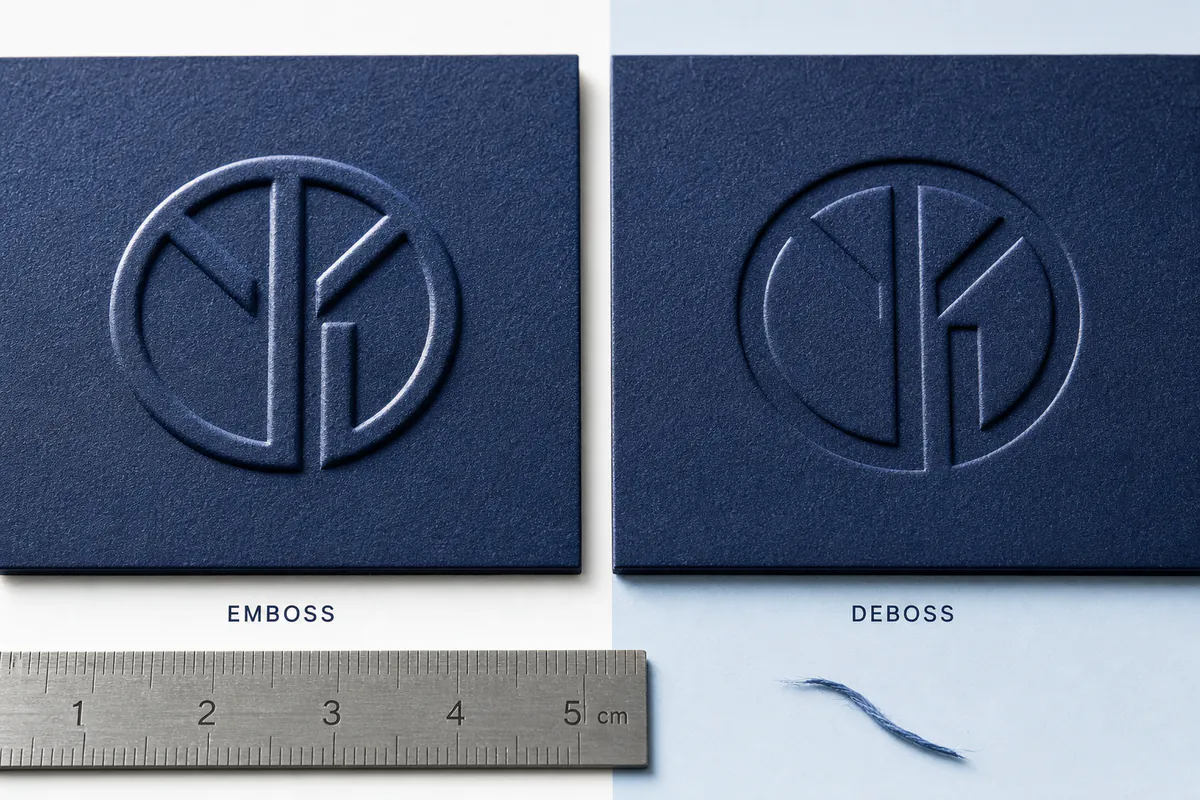
Embossing pushes a design up. Debossing presses it down.
That one-line answer is accurate, but it is not enough to choose a finish for a carton, rigid box, leather patch or sweatshirt. The result also depends on what is being pressed, how fine the artwork is, whether the back will be visible, and how much setup the job needs.
As a starting point, use embossing when the mark should project and catch the light. Use debossing when it should sit into the surface and feel more restrained. Then test that choice on the actual material. A polished screen mockup cannot show paper cracking, a leather grain swallowing fine type, or a fabric losing its texture after a wash.
Deboss vs emboss at a glance
| Question | Emboss | Deboss |
|---|---|---|
| What happens to the design? | It rises above the surrounding surface. | It sits below the surrounding surface. |
| How does it read visually? | Highlights and shadows make it more prominent. | The inset shadow usually feels quieter and more integrated. |
| What does it feel like? | You can feel the form above the surface. | You can feel the impression below the surface. |
| What about the reverse side? | It may show an opposite impression or need clearance behind it. | The back may also be affected, depending on the tool and product construction. |
| Where is it often used? | Cartons, invitations, book covers, labels and premium paper packaging. | Leather goods, rigid box wraps, notebooks, paper packaging and promotional items. |
| Can it be blind? | Yes. No ink or foil is added. | Yes. No ink or foil is added. |
| Can it include foil or ink? | Yes, when the artwork, tools and registration support it. | Often yes, subject to the material and production process. |
| Which costs less? | No automatic winner. | Some one-sided jobs are simpler, but that is not true for every product. |
How embossing and debossing work
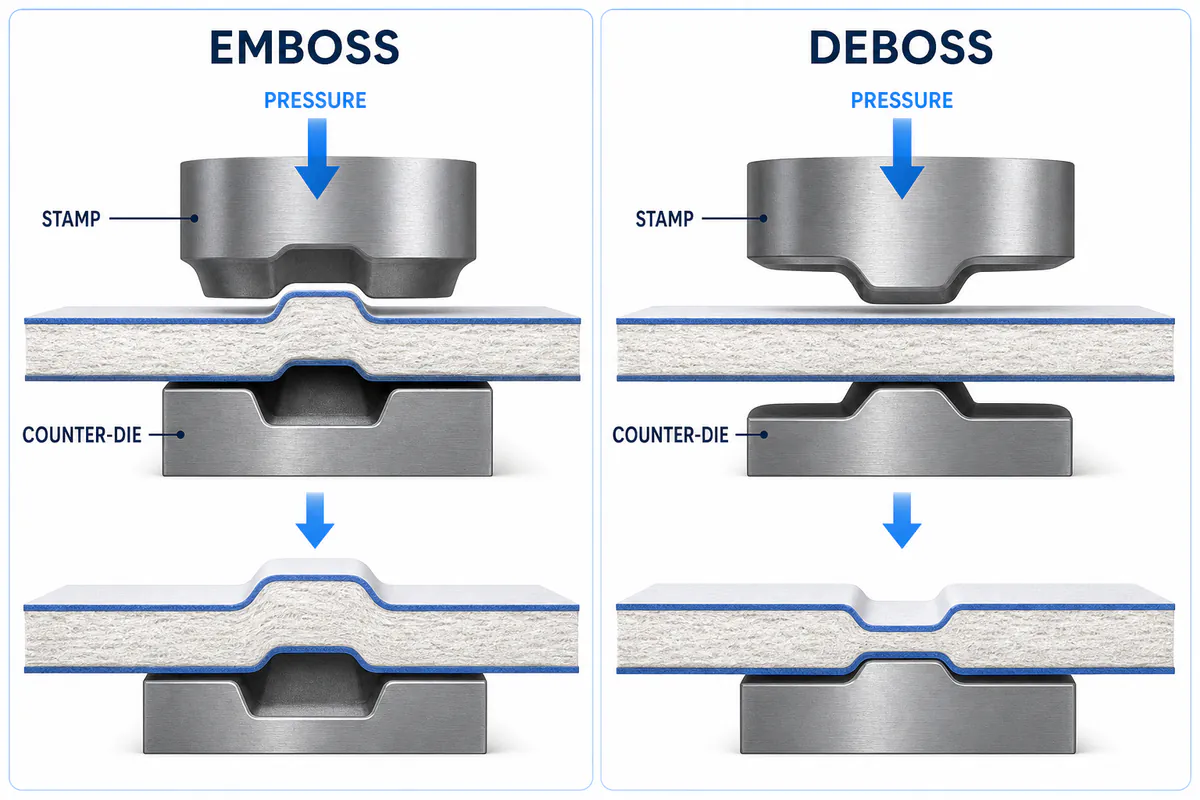
For paperboard, the usual setup is a custom stamp paired with a matching counter-die. The sheet is pressed between them, and the fibers take the shape of the relief. Change the board and you may change the result, even if the logo file stays exactly the same.
The Iggesund Graphics Handbook explains why the tool has to suit the board grade, thickness, relief shape and depth. A strong, formable stock can hold a crisp impression with less cracking. Push for a very deep relief or tiny detail, and the choice of workable stock becomes narrower.
Leather and fabric share the emboss/deboss vocabulary, but their production methods can differ. A leather patch may be stamped from one accessible face, sometimes with heat. A textile texture may come from heat, pressure, molded surfaces or another specialist finishing process. Ask the supplier what the job actually requires; “same logo, different material” does not mean “same tool, same settings.”
Which one looks better?
Turn a sample under a side light. An embossed edge catches a highlight on one side and throws a shadow on the other, so the mark tends to announce itself. This can give a one-color box more presence without adding another ink.
A deboss behaves differently. The shadow collects inside the impression, making the mark feel seated in the material. On a leather cover or a wrapped rigid box, that can be enough branding on its own.
Neither description is a quality rating. A bold embossed logo can become muddy if the letters are cramped. A subtle deboss can disappear on a dark, low-contrast surface. And a deep impression is not automatically a better one: it may distort thin stock or make the reverse side unusable.
Judge the artwork at production size, not at 200% zoom. Small counters, hairline strokes and tight gaps are the first areas to question. If they matter to the identity, ask the converter to recommend a minimum workable line and gap for the chosen material, then confirm it in the sample.
Best choice by material and product
Folding cartons, paper bags and tags
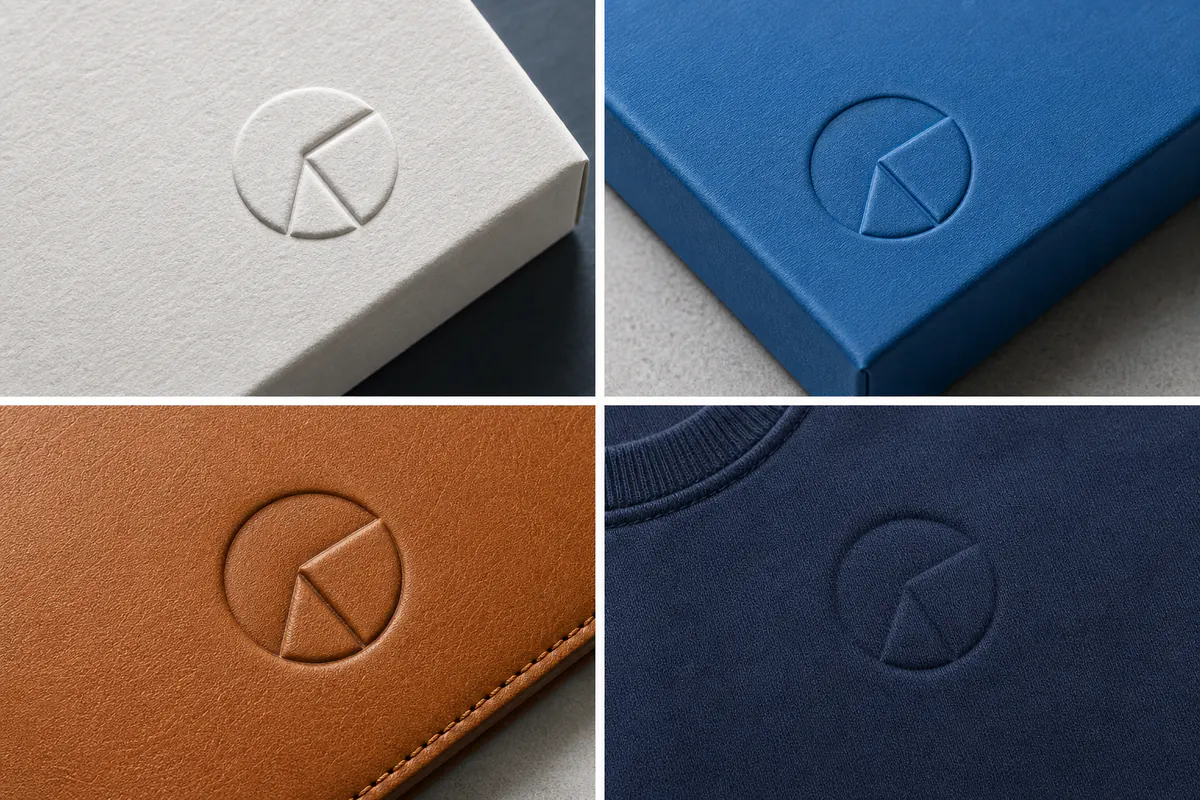
Paperboard can hold beautifully crisp relief. It can also crack, whiten or lose detail when the stock, coating and tool do not work together.
Keep the mark away from scores, tight folds, perforations and cut edges unless that exact construction has been tested. If it must align with printed color or foil, add registration to the acceptance criteria. The Mohawk embossing guide is useful here: stock, artwork and finishing need to be coordinated early, not after the rest of the package has been approved.
Rigid boxes and wrapped paper
With a rigid box, the wrap and the board underneath behave as one structure. An edge, corner or board joint can change how evenly the pressure lands. Put the exact mark position on the dieline, then inspect an assembled box. A perfect flat sheet can still look wrong after wrapping.
Debossing often suits this construction because the inset mark can feel clean and controlled. Embossing remains an option when the raised form has enough clearance and the wrapper can hold it.
Leather and PU
Leather patches, wallets, cases and notebook covers often use a debossed mark because it works from the visible face and does not require ink. But “leather” is not one specification. Thickness, grain, top finish, backing and heat sensitivity all change the edge and color response.
PU needs its own trial too. Heat or pressure that looks clean on one synthetic surface may leave shine, distortion or a color shift on another. Request the exact material and color in the sample, not a substitute swatch.
Fabric and clothing
Textiles introduce stretch, recovery, washing and fiber composition. A finish that looks convincing on a loose swatch may flatten when the fabric is stretched or sewn into a garment.
The Fiber-Seal technical note on embossed fabrics notes that thermoplastic fibers can retain heat-formed texture more readily than many natural fibers. That is a useful clue, not permission to skip testing. For clothing, define wash, stretch and rub checks, and look for shine, scorching or uneven depth.
If the texture will not hold, consider embroidery, a woven label, a separate patch, a transfer or silicone print. For the wider supplier and sample process, see Fulfillbot’s guide to clothing manufacturers in China.
Is embossing or debossing more expensive?
There is no reliable one-word answer. Compare the complete job:
Total finishing cost = tooling + setup + per-unit finishing + extra finishes + sampling or rework
For a matched-die paperboard job, embossing and debossing may both need a custom die and counter-die. With the same artwork area, stock, depth and quantity, their prices can be close. A one-sided deboss on certain leather or promotional products may need a simpler setup and come in lower.
The finish name is only one line in the quotation. Also check:
- die material, size and complexity;
- single-level or multi-level relief;
- material thickness and formability;
- whether the back is accessible;
- foil or ink registration;
- setup waste and press time;
- units per design, color and SKU;
- sample rounds and change requests;
- inspection, rework and tool-storage terms.
Two prices are comparable only when those inputs match. A low quote that leaves out the counter-die, production sample, foil pass or tool ownership is not the same offer.
MOQ works the same way: it belongs to the complete production setup, not just “emboss” or “deboss.” Ask whether the minimum applies per design, color, material, SKU or press run. This MOQ guide explains why those definitions matter when you normalize quotes.
Blind, registered and combination finishes
Blind embossing or blind debossing adds no ink or foil. Light and shadow do all the work. It is a strong choice when the stock and logo create enough contrast without color.
Registered relief aligns an emboss or deboss with printed artwork. It can make the mark easier to see, but even a small shift becomes noticeable.
Foil embossing combines relief with metallic or pigmented foil. Some production routes form and foil in one operation; others use separate steps. Confirm the sequence and the allowed registration shift before the sample is made.
Multi-level or sculpted relief uses more than one height to create a dimensional form. The result can be striking. It also asks more of the artwork, die and approval process, so reserve it for designs where the extra depth carries real visual value.
What to send in an RFQ
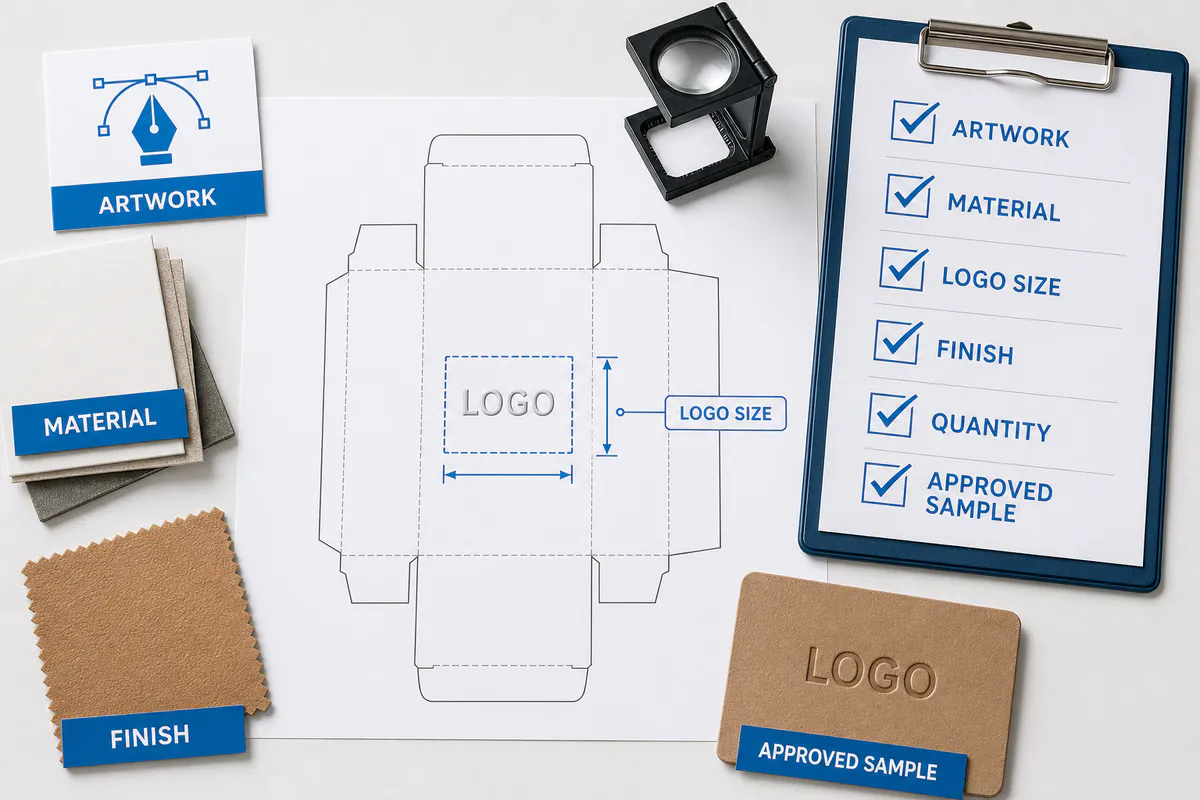
A logo file by itself leaves too many decisions open. Give the supplier a brief that can be quoted and sampled:
- Vector artwork: outline the fonts and remove hidden or unwanted layers.
- Real dimensions: state the logo width and height, then mark its position on a dieline or drawing.
- Final substrate: include grade, thickness, color, coating, texture and backing where relevant.
- Finish: state emboss or deboss, then add blind, foil, ink-registered, single-level or multi-level.
- Visual direction: attach references, but do not mistake “make it like this” for a measurable specification.
- Quantity: break it down by design, color, size and SKU.
- Reverse-side requirement: say whether the back is visible, printed, glued or close to another component.
- Use tests: list folding, assembly, wash, stretch, rub or abrasion checks that matter to the product.
- Sample approval: name the sample type, revision process and person who can approve it.
- Tool terms: record ownership, storage, remake conditions and approval for any process or material change.
Include the finish in the first RFQ. Adding it after the package, stock and price are settled can force a redesign or a new quote. Fulfillbot’s China sourcing service can coordinate product requirements, supplier communication, samples and available quality checks within the agreed project scope.
Tooling also raises a practical payment question: who is taking the deposit, who controls production, and where will the tool be used? Before a meaningful commitment, connect the seller, payment beneficiary, production site and written specification. Fulfillbot’s supplier verification guide lays out that evidence chain.
Check the physical sample
Start with side light, then view it under the lighting the customer is likely to see. Run a fingertip over the edge. Fold or assemble the package. Turn it over.
Record:
- correct relief direction and acceptable visual strength;
- clean edges, open counters and readable small details;
- cracks, whitening, delamination, scorching or unwanted gloss;
- alignment with print, foil, folds and cuts;
- logo size and position;
- reverse-side appearance and internal clearance;
- the result after folding, wrapping or assembly;
- wash, stretch and rub performance for textiles;
- consistency across several pieces rather than one showcase sample.
Keep one approved unit as the physical reference and translate its important features into written acceptance criteria. For a bulk order, AQL sampling inspection can support an accept-or-reject decision against predefined defect rules. It still needs the specification and approved sample; “looks good” is not an inspection standard.
Embossing and debossing vs other logo methods
| Method | What it does | Use it when |
|---|---|---|
| Foil stamping | Adds metallic or pigmented foil, with or without relief | Color and reflectivity matter more than texture alone |
| Engraving | Removes or cuts material | The product is suitable for a cut mark |
| Letterpress | Presses inked artwork into paper | Printing is central and the impression is part of the style |
| Raised ink or screen print | Builds a tactile layer on top | You want a raised colored mark without reshaping the base |
| Spot UV | Adds selective gloss | Contrast matters more than deep relief |
| Embroidery, patch or woven label | Adds a separate textile element | Wash performance and fabric compatibility outweigh molded texture |
Embossing is not engraving. Embossing reshapes the substrate with pressure; engraving cuts or removes material. A deboss may resemble an engraving in a photograph, which is why an RFQ should name the process and material rather than depend on a mood board.
FAQ
What does debossed look like?
A debossed design sits below the surrounding surface. Side light creates a shadow inside the impression while the untouched surface remains higher.
Do you emboss or deboss leather?
Both are possible. Debossing is common because the mark can be pressed from the visible face, but leather type, thickness, grain, finish, backing and heat sensitivity determine what will work. Sample the exact material.
Is embossing or debossing more expensive?
Neither is always cheaper. Matched-die paperboard jobs can cost about the same, while some one-sided debossing setups are simpler. Compare like-for-like quotes for material, artwork, depth, quantity, extras, sample scope and tooling terms.
Can embossing or debossing be combined with foil?
Yes. Foil embossing and registered relief are established finishing options. The converter still needs to confirm the artwork setup, production sequence and registration tolerance.
Does debossing last longer than embossing?
Not by definition. Durability comes from the material, relief shape, tool setup and use conditions. Test the final paper, leather or fabric under realistic folding, handling, washing or abrasion.
Can you deboss fabric?
Some textiles can be heat-formed or pressure-finished, especially when they contain suitable thermoplastic fibers. Results vary. Approve a production swatch and test washing, stretch, rubbing, shine and scorching.
Before you approve production
The direction is easy to remember: emboss goes up; deboss goes down. The buying decision is more grounded. It is about getting the right contrast from the actual substrate without damaging the product or creating an avoidable production problem.
Lock the artwork, material, relief direction, reverse-side requirement, quantity, extra finish and inspection rules. Then approve a physical sample under realistic light and use conditions.
For a private-label product or custom packaging project, review Fulfillbot’s private labeling service and guide to private label products. Share the product, material, vector logo, target quantity and reference images so the sourcing team can identify what the supplier needs to test before production.