Alibaba is built for businesses that need wholesale pricing, supplier negotiation, customization, private label, or bulk importing. Temu is built for individual shoppers who want cheap retail items with simple checkout and consumer delivery. They are not the same company, and they solve different problems.
If you are sourcing products to resell, the choice between Alibaba and Temu is really a choice between a B2B wholesale platform and a B2C retail marketplace. This guide compares the two on pricing, minimum orders, customization, shipping, buyer protection, and dropshipping, and shows which platform fits which seller.
If you searched for Temu vs Alibaba, the short answer is the same: use Temu for simple retail purchases; use Alibaba when you need supplier negotiation, customization, bulk inventory, or a path toward private label sourcing.
So which is better, Alibaba or Temu? For business sourcing, Alibaba is better. For buying one inexpensive item as a consumer, Temu is easier.
Alibaba vs Temu at a Glance
| Factor | Alibaba | Temu |
|---|---|---|
| Best for | Bulk sourcing, wholesale, private label | Single retail purchases, fast consumer buying |
| Business model | B2B wholesale directory (factory-facing) | B2C marketplace (third-party sellers) |
| Buyer type | Resellers, brands, importers | Individual consumers |
| Minimum order | Negotiable; often bulk, but some suppliers accept MOQ = 1 | One item |
| Pricing | Lowest per-unit at scale (wholesale) | Lowest for single low-cost items |
| Customization / private label | Yes (logo, packaging, specs) | No |
| Buyer protection | Trade Assurance escrow | Returns and refunds (90-day window) |
| Dropshipping | Workable with the right supplier and integrations | Not designed for it |
| Shipping | Varies by supplier; freight for bulk | Free consumer shipping, ~8–25 days |
| Owner | Alibaba Group | PDD Holdings |
What Is Temu?
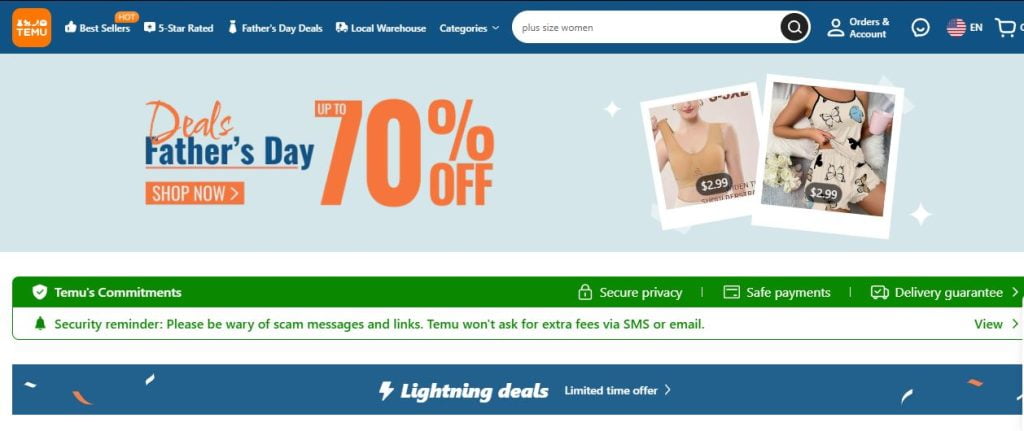
Temu is a cross-border B2C marketplace launched in the United States in September 2022. It is owned by PDD Holdings, the company behind Pinduoduo. Temu connects individual shoppers with mostly China-based third-party sellers and competes almost entirely on price across categories like fashion, beauty, home goods, and gadgets. If you want a deeper consumer-side risk check, read our full guide on whether Temu is legit.
Its name comes from the slogan “Team Up, Price Down” — the more people buy an item, the lower the price. Temu is a legitimate platform and orders do arrive, but quality can be inconsistent and independent customer reviews are mixed. Temu is a place to buy cheap finished goods, not a place to source inventory for a brand.
What Is Alibaba?
Alibaba.com is the B2B side of the Alibaba Group — a wholesale directory that connects buyers with Chinese factories and trading companies. It gives buyers access to a large supplier base across many product categories. You buy in volume, negotiate directly with suppliers, request samples, and can order custom or private-label production. For the full buying workflow, see our guide on how to buy from Alibaba.
Alibaba is the natural next step once a product is validated: it offers wholesale pricing, factory communication, and customization that a retail marketplace cannot. The trade-off is more work upfront — vetting suppliers, negotiating minimums, and arranging freight and inspection. If your main concern is platform risk, start with is Alibaba legit? before placing a first order.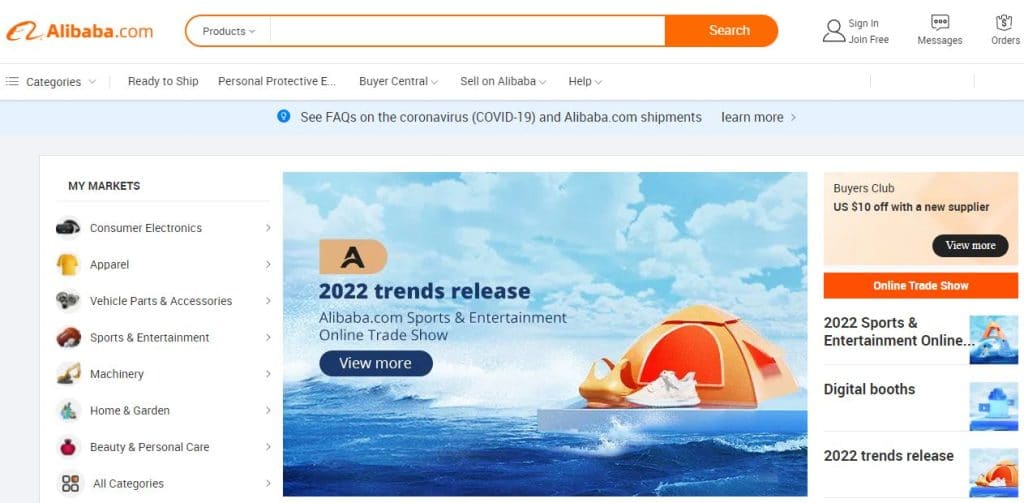
Key Differences Between Alibaba and Temu
The single most important difference: Temu sells to end consumers; Alibaba sells to businesses. Everything else follows from that.
- Audience. Temu optimizes for an individual shopper buying one item. Alibaba optimizes for a buyer placing a wholesale order.
- Pricing logic. Temu wins on the sticker price of a single cheap product. Alibaba wins on per-unit cost once you order in quantity.
- Control. On Temu you take the listing as-is. On Alibaba you can change specs, materials, packaging, and branding.
- Risk profile. Temu risk is product quality on a small purchase. Alibaba risk is supplier reliability on a larger commitment — which is why supplier verification and escrow matter.
Pricing: Which Is Cheaper?
It depends on what you are buying.
- Single retail item: Temu is usually cheaper. Its model is built around very low prices on individual consumer goods.
- Bulk / wholesale: Alibaba is usually cheaper per unit. Direct factory pricing and negotiation cut the cost as quantity rises.
The honest answer for a reseller is that the sticker price is not the real number. On Alibaba, your total landed cost depends on MOQ, freight, customs, inspection, and packaging — not just the quoted unit price. A low per-unit price with high shipping and a failed inspection is not cheap. Compare landed cost per unit, not the headline quote. If shipping is the confusing part, this breakdown of Alibaba shipping costs is a useful next read.
MOQ, Bulk Orders, and Customization
This is where Alibaba and Temu stop being comparable.
Temu has no concept of MOQ, negotiation, or customization — you buy one finished item. Alibaba is built around all three:
- MOQ is negotiable. Minimums exist because factories amortize setup, tooling, and labor across a run, but they are a starting point, not a wall. You can lower an MOQ by committing to a deposit, accepting a slightly higher unit price, or splitting delivery. If a supplier’s MOQ is 2–3× more than you need, it is often faster to switch suppliers than to negotiate. For a beginner-friendly explanation, see what MOQ means.
- Customization and private label. Alibaba suppliers can produce to your specs, add your logo, and use custom packaging — the foundation of building a brand rather than reselling someone else’s product.
- Trading company vs factory. Trading companies usually offer lower MOQs at higher prices; factories offer lower prices at higher MOQs.
If your goal is a private-label brand, Temu cannot help you. Alibaba is the platform for it.
Shipping, Returns, and Buyer Protection
Temu offers free shipping to consumers in most markets, typically 8–25 days, with express options at a cost. Its consumer protection is strong on paper: a 90-day return window with the first return shipping free. We also have a separate guide to Temu’s return policy if returns are your main concern.
Alibaba shipping varies by supplier and method. Bulk orders move by sea freight (roughly a month) or faster, costlier air freight. A China freight forwarder or shipping agent can help with consolidation, customs paperwork, and delivery planning. Buyer protection comes from Trade Assurance, Alibaba’s free escrow service: your payment is held until you confirm the order, and it covers non-delivery and goods that clearly fail the agreed specification.
Two things to understand about Trade Assurance before you rely on it:
- It mainly protects against non-delivery and clear spec mismatch. For quality disputes, your payout depends on how thoroughly you documented the specification up front.
- It only works on-platform. Pay through alibaba.com — private wire transfers or Western Union are not protected.
Trade Assurance is a refund mechanism after the fact. It does not replace a pre-shipment inspection, which catches problems before the goods leave the factory. This matters because the sample and the bulk order can differ; see our guide on why Alibaba bulk orders differ from samples.
Dropshipping: Can You Use Temu or Alibaba?
Temu is not built for dropshipping. It offers no reseller tools or integrations. You can technically place an order and ship it to a customer’s address, but there is no automation, no margin protection, and Temu branding can appear in the package. For a fuller warning list, see our Temu dropshipping guide.
We don’t recommend using Temu for your dropshipping business. Their parcels usually come with Temu branding, which makes customers aware that the items are shipped from Temu. In addition, the platform does not officially support this type of operation.
Alibaba can work for dropshipping, with caveats. Most Alibaba suppliers default to bulk, so you need to filter for suppliers who accept single-unit fulfillment (MOQ = 1), Trade Assurance, ready-to-ship stock, and paid samples. Shopify and WooCommerce can connect to Alibaba’s dropshipping center directly; other platforms need a connector like Spocket or Syncee. We cover the model in more detail in Alibaba dropshipping.
A realistic path for most sellers: validate demand cheaply (on a retail platform), then move to Alibaba for wholesale and private label once a product proves out.
Are Alibaba and Temu the Same Company?
No. Alibaba.com is part of Alibaba Group. Temu is owned by PDD Holdings (the parent of Pinduoduo). They are separate companies with different ownership and different business models — Alibaba is B2B wholesale; Temu is B2C retail.
Use Alibaba If / Use Temu If
Use Alibaba if you need to:
- Buy inventory in bulk at wholesale pricing
- Customize products or build a private-label brand
- Negotiate directly with a factory
- Arrange inspection, freight forwarding, or custom packaging
- Scale a product you have already validated
Use Temu if you need to:
- Buy a single, low-cost retail item
- Get fast consumer checkout and simple returns
- Avoid minimums, negotiation, and customization
- Test what cheap consumer products look like in a category
Related Comparisons
- Alibaba vs Temu vs AliExpress: AliExpress is also part of Alibaba Group, but it is B2C retail — single-unit, no customization — sitting between Temu (consumer) and Alibaba (wholesale). It is a common place to validate a product before moving to Alibaba for private label. For the deeper two-platform version, read Alibaba vs AliExpress.
- Temu vs AliExpress: Both are retail. Temu skews cheaper and more gamified; AliExpress has a longer track record and clearer buyer protection. Related: is AliExpress safe?
- Alibaba for sourcing: If Alibaba feels like too much work, a China sourcing agent can pre-vet factories, negotiate, and arrange inspection for roughly a 3–10% commission.
A Sourcing Note for Resellers
For sellers, the practical question is not “which platform is better” but “where am I in the product lifecycle.” A useful rule of thumb:
- Testing a new product? Stay on retail (Temu or AliExpress) to keep risk low and avoid committing to a bulk order.
- Product is selling? Move to Alibaba for wholesale pricing and private label, where margin and brand control live. Amazon sellers can also read how to buy from Alibaba and sell on Amazon.
- Committing to a bulk order? This is where supplier verification, a documented spec, Trade Assurance, and a pre-shipment inspection stop being optional.
Inspection and freight forwarding become necessary at the point you place a real bulk order — not before. That transition, from cheap retail testing to verified factory sourcing, is exactly where most sellers lose money if they skip the checks.
FAQs:
Which is better, Alibaba or Temu?
Alibaba is better for sourcing, wholesale, Amazon FBA, Shopify inventory, private label, and bulk orders. Temu is better for one-off consumer shopping, cheap finished goods, and simple retail checkout. They are not interchangeable.
Which is cheaper, Alibaba or Temu?
Temu is usually cheaper for buying one low-cost retail item. Alibaba is usually cheaper per unit when you buy in bulk, but the real cost also includes MOQ, freight, customs, inspection, packaging, and possible defects.
Can you use Alibaba for dropshipping?
Yes, if you filter for suppliers who accept single-unit fulfillment, Trade Assurance, and ready-to-ship stock. Shopify and WooCommerce integrate with Alibaba’s dropshipping center directly.
Which platform has better buyer protection?
They protect different things. Temu offers consumer returns with a 90-day window. Alibaba’s Trade Assurance escrow protects business orders against non-delivery and spec mismatch, but quality coverage depends on your documented specification.
When should a seller move from Temu or AliExpress testing to Alibaba sourcing?
Move to Alibaba once the product has repeat demand and you need better margins, private label control, custom packaging, or stable inventory. That is also the point where supplier verification, written specifications, inspection, and freight planning become important.
Alibaba vs. Temu – Final Verdict!
Overall, Alibaba is the better platform for those who want to buy in bulk or dropship. However, Temu is better for single purchases and faster shipping times. When comparing both platforms, it is difficult to declare one better.
If you are involved in sourcing or procurement, I would not recommend using Temu for purchasing. It is designed for end consumers, and the product quality can vary significantly. You should not be attracted by its low prices, as it may end up harming your business.