The best 3PL for a small business is rarely the cheapest provider or the one with the most warehouses. It is the one whose operation, pricing, technology, support, and contract fit the orders you really ship.
Give every candidate the same data. Ask the same 17 questions. Request evidence instead of accepting sales claims. Then price a representative month, test the workflow, and make sure you can leave without losing access to your inventory or data.
Here is how to put that into practice.
Quick answer: Define your requirements before requesting quotes. Compare all-in monthly cost rather than one pick-and-pack fee. Put service promises in the SLA, test integrations and exception handling, review liability and exit clauses, and use a pilot before moving all your inventory.
Is a 3PL right for your small ecommerce business yet?
There is no useful universal rule such as “move to a 3PL at 500 orders per month.” Two brands with the same order count can have completely different labor, storage, packaging, return, and shipping costs.
A 3PL becomes worth evaluating when self-fulfillment is creating a measurable constraint:
- Orders consume time that should go into product, marketing, or customer retention.
- You are running out of safe storage or packing space.
- Late shipments, picking errors, or inventory discrepancies are increasing.
- Seasonal peaks require temporary labor and equipment you cannot justify year-round.
- Customers are far from your current shipping point, pushing up transit time or parcel cost.
- You need kitting, branded packaging, wholesale preparation, or returns processing that your current setup cannot handle consistently.
Outsourcing may be premature when volume is extremely irregular, margins cannot absorb a complete fulfillment bill, or the customer experience depends on complex customization that is difficult to standardize. A founder handwriting gift notes is not an efficient warehouse process, but it may still be part of the product. Do not outsource the thing customers actually value without testing whether a partner can reproduce it.
Shopify’s current 3PL guide also frames the decision around cost, capacity, speed, and errors rather than one universal order threshold. Build a basic comparison before calling providers:
Current monthly fulfillment cost
= labor + space + packaging + software + equipment + postage + error/return cost + management time
Proposed 3PL monthly cost
= receiving + storage + pick and pack + packaging + postage/markup + returns + account/software fees + minimums + project/peak charges
The result will not tell you everything. It will stop you from comparing your full in-house cost with one attractive line from a 3PL rate card. If you need a process refresher first, see how ecommerce order fulfillment works.
Build a one-page fulfillment brief before contacting 3PLs
A quote is only comparable when every provider is pricing the same job. “We ship about 1,000 orders” is not enough.
Prepare one page, plus supporting order data, that covers:
- Average and peak monthly orders
- Daily order pattern and cutoff-time distribution
- Average items per order and the share of multi-item orders
- Active SKU count, total SKU count, and SKU velocity
- Product dimensions, weights, value, and handling restrictions
- Current pallet, carton, bin, or cubic storage footprint
- Customer destination ZIP or postal-code distribution
- Return rate and usual disposition: restock, repair, quarantine, or disposal
- Storefronts, marketplaces, OMS, ERP, and other systems
- Current carrier accounts and service levels
- Kitting, inserts, custom packaging, lot/serial/expiry tracking, fragile handling, or B2B labeling
- Forecast growth, launches, promotions, and seasonal peaks
Amazon and Maersk both put defining the operation before provider selection in their guidance on choosing a 3PL and preparing a logistics brief. This is not administrative busywork. Without it, one candidate may price one warehouse, another may assume two, and a third may omit returns or special projects. The totals will look comparable while describing different services.
Questions 1–5: Does the 3PL fit your business?
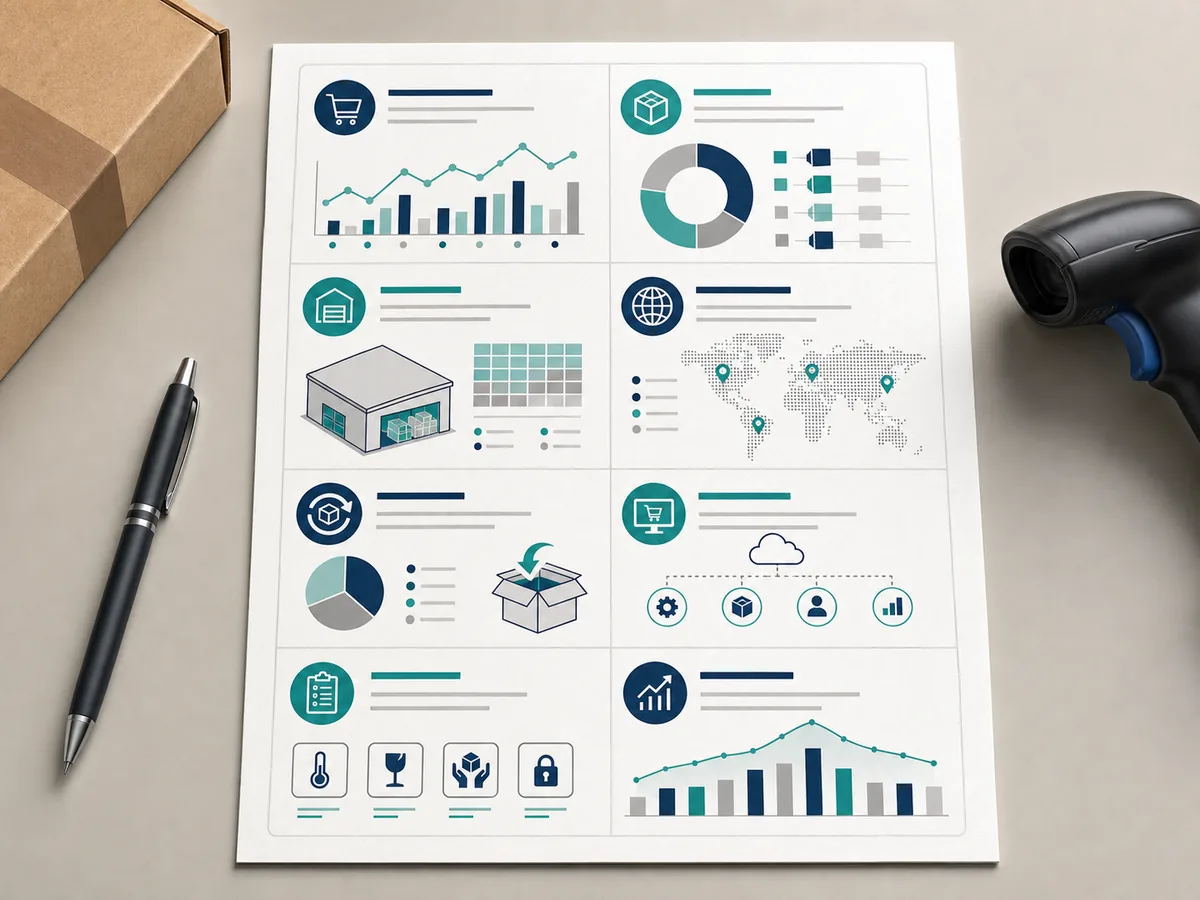
“Small-business friendly” is a marketing label. Fit is specific: your products, order mix, channels, customers, service requirements, and growth pattern.
1. Do you regularly handle products and order profiles like ours?
A warehouse built around lightweight, single-item parcels may struggle with fragile goods, many slow-moving SKUs, subscription boxes, wholesale cases, or regulated products. The reverse is also true: a highly specialized operation may be needlessly expensive for a simple catalog.
Ask the candidate to describe two or three workflows that resemble yours. You do not need customer names immediately, but you do need specifics: items per order, SKU complexity, storage method, packing steps, and exception handling. Later, ask for references you can contact.
Ask to see a relevant SOP, examples of comparable order profiles, required certifications, and references from merchants with similar needs.
Be cautious when the answer is “we can handle anything.” A credible operator can explain both its sweet spot and the work it would decline.
2. What minimums apply, and what happens when our volume drops?
Some 3PLs accept small accounts but impose a monthly minimum, minimum storage charge, onboarding fee, project minimum, or minimum spend. If actual activity falls short, you may pay the difference. A promotional waiver does not help if it is absent from the contract.
Ask the provider to model a slow month, not just your forecast average. Include zero-order days, low inventory turns, and any account or software fee that continues regardless of volume.
Put three things on your request list: the complete minimum schedule, a sample low-volume invoice, and the contract clause covering shortfalls or repricing.
Also ask whether low volume changes your support tier or priority during peak season. Being accepted as a client is not the same as being operationally supported.
3. Which warehouse would hold our inventory, and what does that mean for our customers?
A map with ten warehouse pins can look impressive. It says little about your account.
Ask the 3PL to use your historical destination data to compare one-node and multi-node scenarios. The model should show expected shipping zones, transit services, inventory required at each location, transfer fees, and the risk of slow stock becoming stranded.
For a cash-sensitive brand, splitting inventory too early can create more damage than an extra day in transit. You may gain geographic coverage while losing purchasing flexibility and stock availability.
To check the model, request the ZIP-code analysis, the facilities your account can actually use, inventory-allocation assumptions, and rebalancing costs.
If regional storage and distribution are central to the plan, review the provider’s warehousing and distribution scope at the facility level, not just on the company homepage.
4. Can you perform every special handling and brand task we need?
List each nonstandard touch: kitting, subscription assembly, inserts, custom cartons, gift notes, lot or serial tracking, expiry control, inspection, retail labels, and fragile handling. Then ask how each task is performed, checked, timed, and priced.
“No problem” is not an operating procedure.
For custom work, request a sample or small production run. Confirm who approves packaging changes and how old materials are counted or disposed of. If one wrong insert could affect thousands of orders, the quality checkpoint belongs in the SOP.
Before accepting the quote, review the work instructions, a sample output, QC records, turnaround time, and a unit or project rate for each service. A pick-and-pack service description can help separate standard from value-added steps, but your agreement must describe your exact version.
5. How will you protect our service during peaks, launches, and growth?
Ask what the provider needs from you before a launch or seasonal spike: forecast format, notice period, inbound deadline, packaging reservation, and order-release plan. Then ask what changes if actual volume is much higher or lower than forecast.
A useful answer covers labor planning, dock capacity, carrier pickup, cutoff changes, overflow, peak surcharges, and communication triggers. “We scale with you” is not a capacity plan.
A written peak plan matters more than a reassurance from sales. Request its capacity assumptions, surcharge schedule, and performance reporting from a comparable period. If customer-level data is confidential, anonymized reporting can still show how the operation is measured.
Questions 6–10: Can the operation protect inventory and customer experience?
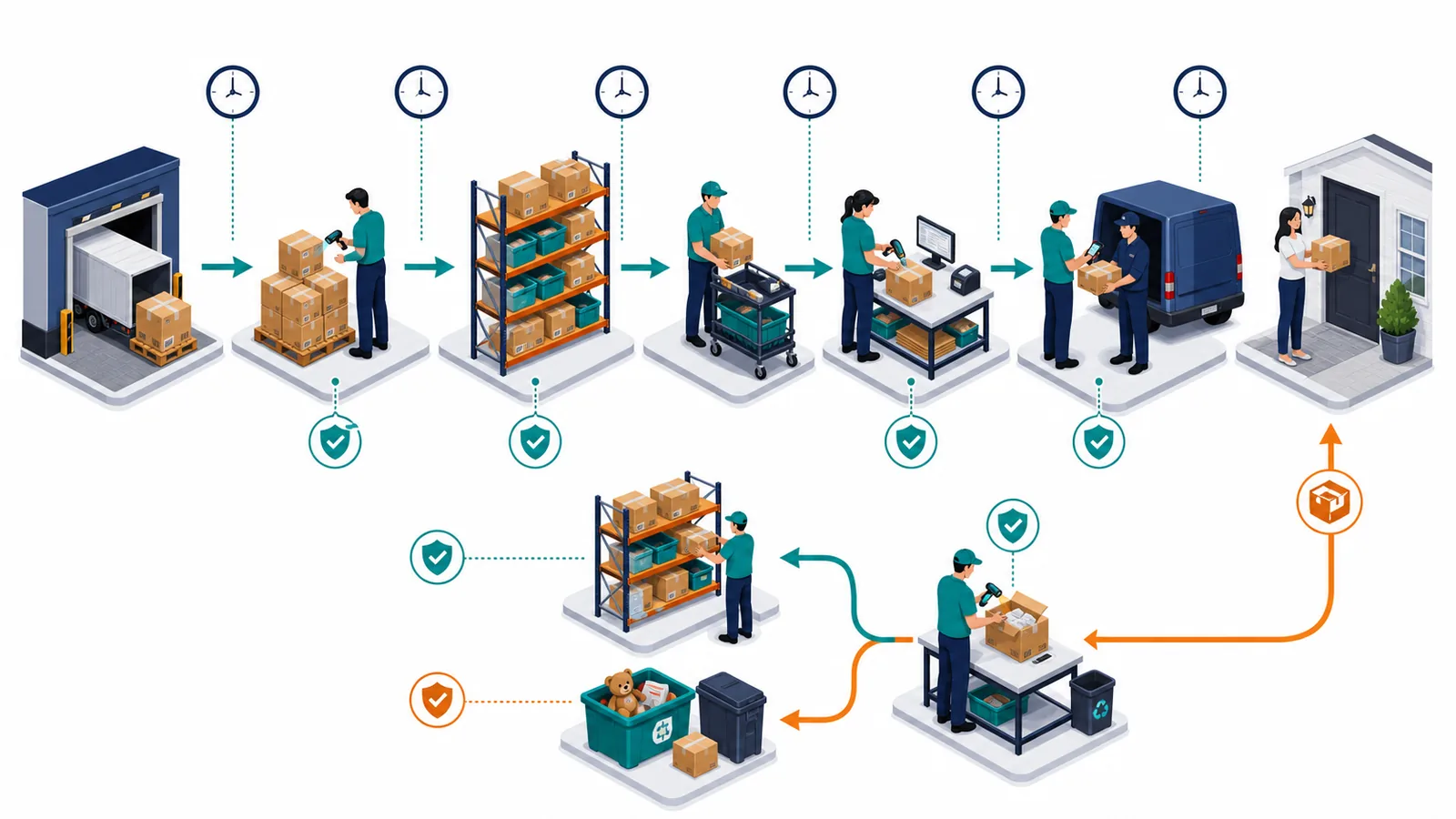
The warehouse journey has more handoffs than “pick, pack, ship.” Inventory must be received, counted, made available, allocated, picked, packed, scanned by a carrier, delivered, and sometimes returned. Each handoff needs an owner and a timestamp.
6. How fast will inbound inventory be received, counted, and made available?
Inventory is not sellable simply because the truck reached the dock. It may wait to be unloaded, counted, investigated, and put away.
Clarify when the receiving clock starts and stops. Is the SLA measured from appointment time, physical arrival, unloading, or receipt of compliant paperwork? What happens when cartons arrive without an advance shipping notice, quantities do not match, or products are damaged?
Ask for the receiving SLA, ASN requirements, counting method, discrepancy report, and a sample receiving log.
The phrase “same-day receiving” is almost meaningless until the events and exceptions are defined.
7. Which fulfillment SLAs do you commit to, and what happens when you miss them?
Separate the metrics. Order cutoff, on-time shipment, order accuracy, carrier acceptance, and on-time delivery are not interchangeable.
For each KPI, pin down the formula, data source, exclusions, reporting cadence, target, and remedy. A provider controls whether an eligible order leaves on time. It may not control a weather delay after carrier acceptance. The SLA should make that boundary clear.
Verify the promise against the SLA exhibit, a sample performance report, the service-credit or corrective-action process, and an example root-cause report.
If the promise appears only in a proposal, ask for it to be added to the agreement. Otherwise, treat it as sales copy.
8. How do you maintain inventory accuracy and handle shrinkage, damage, or loss?
Inventory errors hit a small brand twice: first as missing stock, then as a stockout, refund, or missed sale.
Ask how the 3PL performs cycle counts, controls inventory adjustments, quarantines damaged goods, and maintains an audit trail. Confirm who can change a quantity and whether your team can see the reason, timestamp, and user.
Review the inventory-control SOP, cycle-count schedule, adjustment log, discrepancy report, and the contract’s liability language together. A strong dashboard does not make a weak liability clause harmless.
An annual physical count is not a complete control system. You also need a process for investigating problems while they are still small.
9. What happens to a return from RMA to refund, restock, repair, or disposal?
“We handle returns” can mean little more than accepting a parcel.
Map the full path: RMA creation, receipt, product identification, condition check, photo evidence, grading, disposition, inventory update, and merchant notification. State which products can return to sellable stock and who has authority to repair, liquidate, donate, or destroy an item.
The Shopify 3PL guide likewise recommends examining inspection, restocking, unsellable disposition, system updates, and exception response.
The proof is in the returns SOP, disposition matrix, turnaround SLA, sample report, and fee schedule.
Never allow returned inventory to become sellable automatically unless the product and inspection rules genuinely support that choice.
10. Which carriers and rates will you use, and where can markups or surcharges appear?
A cheap fulfillment fee can hide an expensive shipping bill.
Ask which carrier and service the rate-shopping logic can choose, whether you can use your own account, and whether quoted postage includes a markup. Model actual package weights, dimensions, destinations, and residential addresses. Then include fuel, delivery-area, oversize, address-correction, peak, and other applicable surcharges.
For a usable comparison, collect the carrier matrix, sample rates for representative shipments, surcharge treatment, and written markup policy.
Do not accept “discounted rates” as a complete answer. The relevant comparison is the amount invoiced for your parcel mix, with the common extras included.
Questions 11–12: Will the technology and support work when something breaks?
A logo wall shows that a connection may exist. It does not show what synchronizes, how quickly it synchronizes, or who fixes failed orders.
11. How will our store, marketplaces, OMS, and 3PL systems connect and be tested?
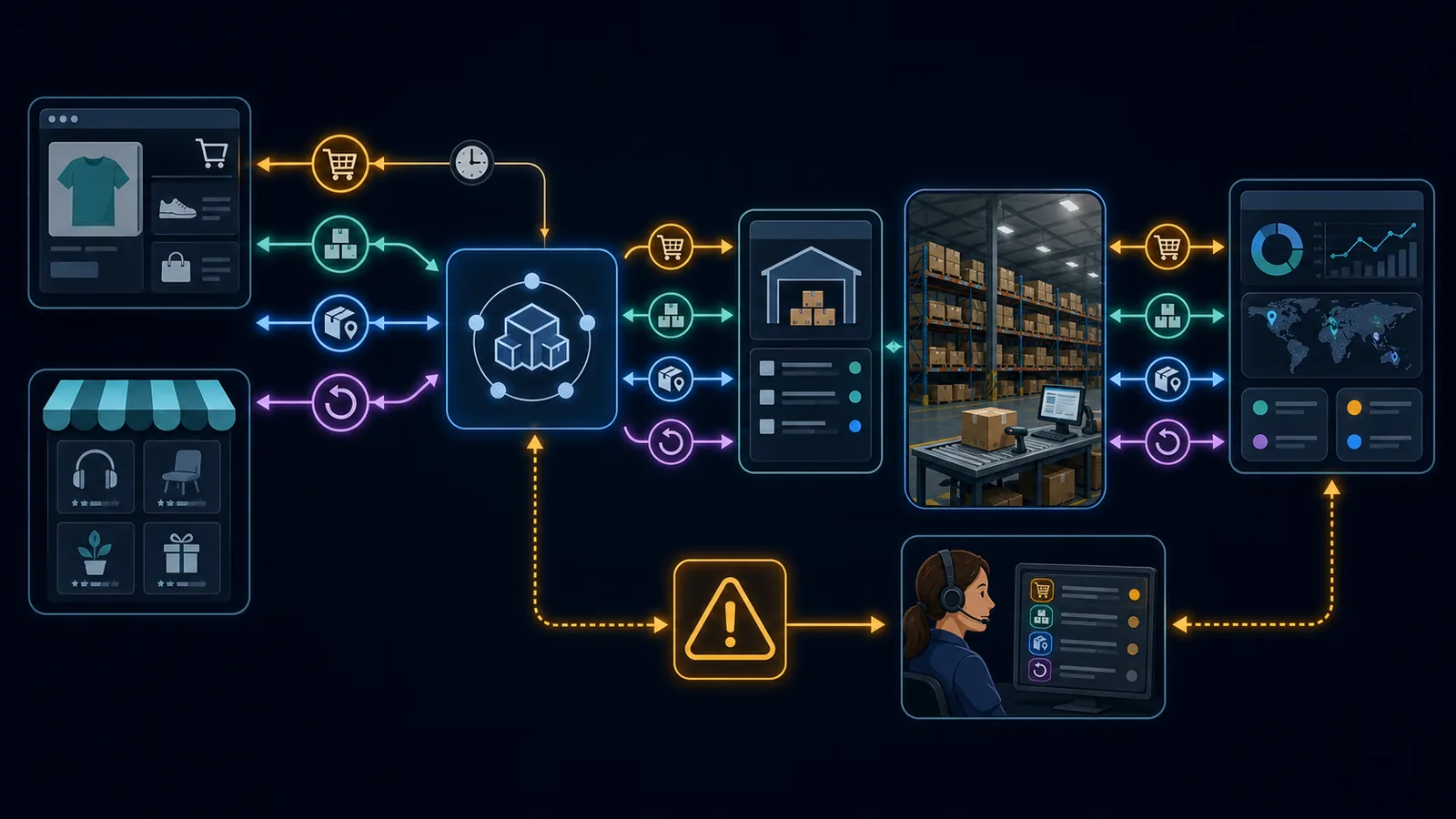
“Shopify integration” might mean a native app, middleware, a custom API, a scheduled file, or a manual upload. Those options do not carry the same cost or failure risk.
Ask the provider to name the integration path, source of truth, sync timing, supported events, and unsupported edge cases. Walk through a duplicate order, an address change, a held order, a partial shipment, a cancellation, and a failed data feed. Someone must own each exception.
Do not leave the integration description in a slide deck. Get the app or API documentation, field mapping, sandbox or user-acceptance test plan, error-handling SOP, implementation schedule, and fees.
For context, Fulfillbot’s approved service scope includes Shopify and WooCommerce connections plus CSV/Excel uploads. Those capabilities still need to be tested against a merchant’s specific workflow before launch; an integration name is not a guarantee that every field or exception is supported.
12. What will we see, who will respond, and how fast will problems escalate?
Request a live dashboard demonstration using realistic records. Check inventory status, held orders, tracking, returns, receiving discrepancies, and billing detail. If the view only highlights happy-path orders, it is not an exception-management tool.
Then ask who responds when something breaks. You need support hours, named roles, communication channels, escalation levels, and response targets. A dedicated account manager can be valuable, but only if authority and backup coverage are clear.
A live dashboard demo, sample reports, escalation matrix, support SLA, and meeting cadence will tell you far more than a promise of “great support.”
One practical test: ask who you would contact at 4 p.m. on the last shipping day before a major promotion ends. The answer should be a process, not “email support.”
Questions 13–17: Are the price, risk, contract, and exit acceptable?
The final decision is not the proposal price. It is the operating cost plus the risk assigned by the SLA, claims process, insurance, and termination terms.

13. Will you price a representative month using our actual orders, inventory, and returns?
Give every shortlisted provider the same historical month and ask it to calculate a sample invoice. Choose a month that includes your normal mix of single- and multi-item orders, storage, inbound receipts, returns, and special work. If seasonality matters, model a peak month too.
The calculation should include:
- Onboarding and integration
- Receiving and putaway
- Storage basis and billing period
- First pick, additional items, packing, and packaging materials
- Inserts, kitting, and other projects
- Postage, markups, and surcharges
- Returns, inspection, and restocking
- Account management and software
- Minimum shortfall
- Peak, after-hours, and unplanned work
This representative-month method is also recommended in Shopify’s discussion of 3PL total cost. It turns different fee structures into one number you can interrogate.
Keep the completed calculation workbook and compare it with a sample detailed invoice. The categories and units should line up.
14. Which fees or minimums can change after signing, and how can we audit or dispute an invoice?
Read beyond the initial rate card. Look for annual increases, carrier adjustments, storage reclassification, long-term storage, peak rates, labor minimums, and charges for work described as “special” or “nonstandard.”
Ask how much notice you receive, whether an index or formula governs an increase, and what detail appears on the invoice. Confirm the deadline for disputing a charge and whether you can access the records needed to check it.
The supporting documents are the complete rate schedule, rate-change clause, surcharge policy, sample invoice, audit rights, and dispute procedure.
The dangerous phrase is not always a high price. It is “fees may change at our discretion.”
15. Who pays when inventory is lost, damaged, mis-shipped, or delayed?
Service credits, warehouse liability, carrier liability, and cargo insurance solve different problems. Ask the provider to separate them.
For each loss scenario, identify the liable party, valuation method, cap, exclusions, claim deadline, required evidence, and resolution owner. “Fully insured” is not enough. You need to know what policy exists, whose interest it protects, and what is excluded.
Ask your reviewer to examine the certificate of insurance, liability clauses, cargo-insurance options, claims SOP, and service-credit schedule as one package.
The International Warehouse Logistics Association’s standard terms illustrate the kinds of clauses a warehouse agreement may contain, including liability limits, claim deadlines, and exclusions. They are an example, not a rule for every contract.
This section is a purchasing checklist, not legal or insurance advice. Have qualified counsel and an insurance adviser review the actual agreement and coverage.
16. How can we leave, and how do we get our inventory and data back?
The time to plan a 3PL exit is before the first inbound shipment.
Check the initial term, auto-renewal, cancellation window, termination rights, transition assistance, inventory count, removal schedule, removal labor, data-export format, and the treatment of open invoices or disputes. Ask whether the agreement grants a warehouse lien and how goods are released after outstanding amounts are resolved.
Walk through the exit using the master service agreement, termination schedule, transition plan, data-export sample, and inventory-removal rate sheet. If the steps do not work on paper, they will not become easier during a dispute.
Pay special attention to an auto-renewal with a short cancellation window, undefined removal charges, or a portal that offers no usable export. Inventory and data portability are operating requirements, not housekeeping details.
Again, contract language varies by jurisdiction and provider. Obtain legal advice on the agreement you are actually considering.
17. Can we verify the operation before committing to a long contract?
End the selection process with verification, not another sales call.
Speak with two relevant customers if possible. Tour the actual facility or request a live video walkthrough. Watch the receiving, storage, picking, packing, and exception areas that would handle your goods. Then run a bounded pilot using representative SKUs, order types, returns, and system exceptions.
Define acceptance criteria before the pilot starts: integration events, receiving completion, order handling, packaging output, inventory reconciliation, support response, billing detail, and issue resolution. Include a rollback plan.
Finish with comparable references, a facility walkthrough, a defined pilot, a user-acceptance checklist, go-live criteria, and a contingency plan.
Testimonials show that someone was willing to be quoted. A reference, a tour, and a pilot show how the operation behaves.
Turn the 17 answers into a decision scorecard
First eliminate providers that fail mandatory requirements such as product restrictions, certifications, integration, geographic coverage, or contract risk. Then score the remaining candidates on evidence quality.
Use these columns:
| Question | Requirement | Candidate answer | Evidence received | Contract location | Gate | Score | Open risk / owner |
|---|---|---|---|---|---|---|---|
| Example: returns | Inspect within agreed window; merchant controls disposal | Candidate response | SOP + sample report | SLA §__ | Pass/fail | 0–4 | Name + due date |
Score each answer:
- 0: no answer or evidence
- 1: verbal answer
- 2: documented capability
- 3: documented and contract-backed
- 4: verified through a reference, tour, or pilot
Set weights according to your business. A high-return apparel brand may weight reverse logistics heavily. A fragile-product company may treat handling and liability as pass/fail. Do not let a high score in low-priority features cancel a failed safety, compliance, or exit requirement.
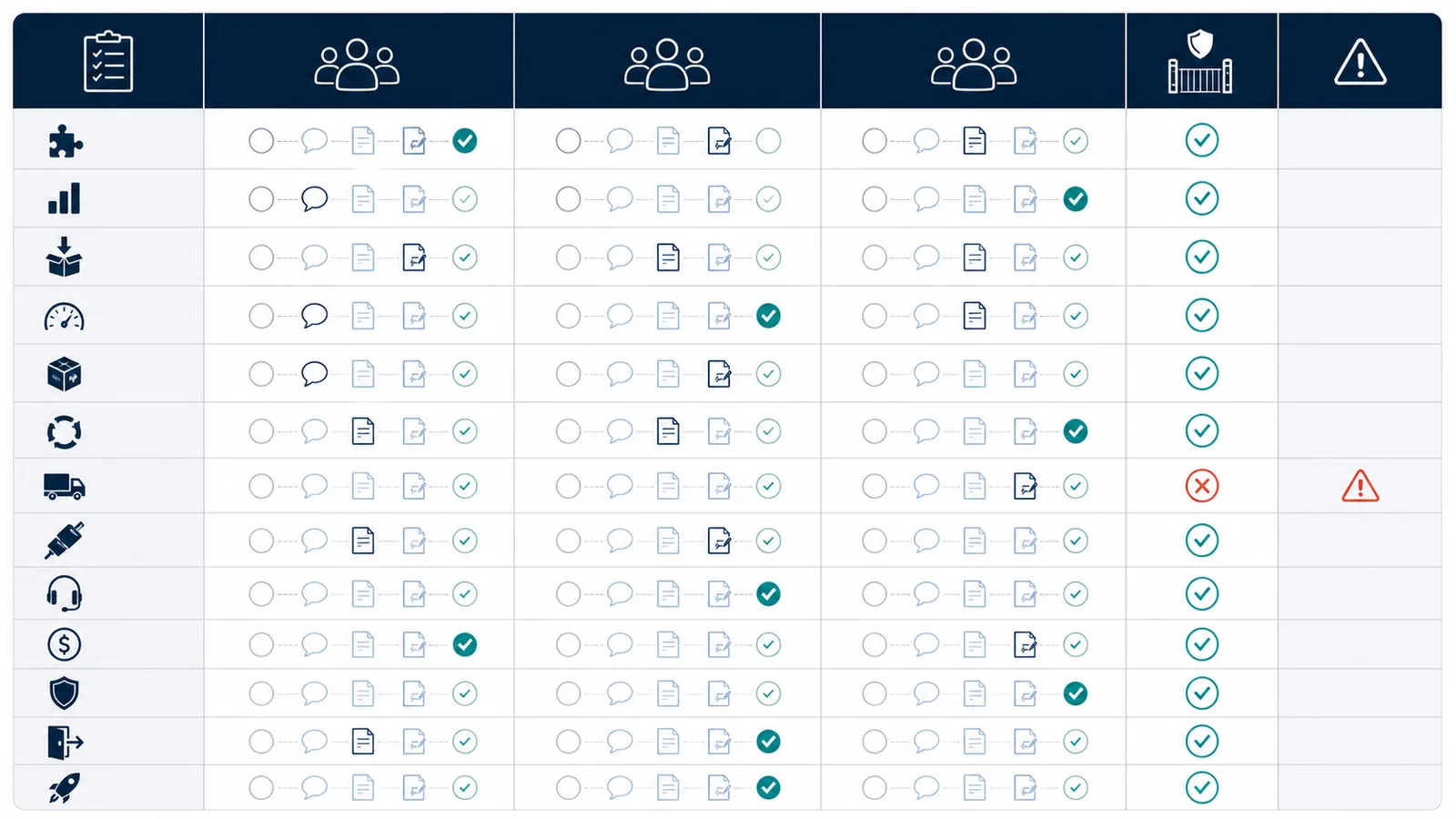
Contract red flags to resolve before inventory moves
Do not move stock while a material promise, charge, responsibility, or exit step remains verbal or undefined.
Pause the deal if you find:
- Proposal promises missing from the SLA or master agreement
- An incomplete fee schedule or undisclosed carrier markup
- KPIs with no formula, data source, exclusions, or remedy
- Liability language no one on your side has reviewed
- A claim deadline your team is unlikely to meet
- Auto-renewal with a narrow cancellation window
- No workable data export or inventory-transition plan
- Undefined receiving, storage, project, or removal charges
- Lien language that has not been reviewed
- No integration acceptance test
- No peak plan or exception owner
Not every red flag requires walking away. It does require a written resolution.
Bottom line: Choose the evidence, not the sales deck
The right 3PL for a small ecommerce business fits the real operation, produces a complete cost model, accepts measurable accountability, proves the workflow, and leaves you a workable exit.
Use this sequence:
Requirement brief → shortlist → 17 answers → evidence → sample-month invoice → contract review → references and tour → pilot → inventory move
If you source products from China or need cross-border ecommerce fulfillment, you can compare Fulfillbot’s order fulfillment services against the same 17-question scorecard. Fulfillbot supports warehousing, pick and pack, branded packaging, and several order-import paths, including Shopify, WooCommerce, and CSV/Excel. That does not make it the best 3PL for every small business. It gives you a defined service scope to verify against your products, destinations, systems, cost model, and contract.
Frequently asked questions
Is a 3PL worth it for a small ecommerce business?
It can be when the complete 3PL cost is justified by better capacity, speed, accuracy, shipping reach, or management focus. There is no universal order threshold. Compare your full current operating cost with a complete 3PL proposal.
How many orders per month do you need for a 3PL?
Providers set different order and spend minimums, and some have no public threshold. Ask each candidate to price a slow, normal, and peak month. The useful number is your break-even point after all fees, not an industry average.
What is the average 3PL fee?
One average is rarely useful because invoices may include receiving, storage, pick and pack, packaging, postage, returns, software, account management, minimums, and projects. Compare representative-month invoices built from the same order and inventory data.
Is a boutique 3PL better for a small business?
Sometimes. A smaller operator may offer closer communication or more flexible processes, but size is only a proxy. Verify capacity, systems, response commitments, relevant experience, financial stability, and contract terms.
Can a 3PL integrate with Shopify?
Many providers can, but “integrates” may describe a native app, middleware, an API, scheduled files, or manual work. Test inventory, order, cancellation, tracking, return, and exception flows before launch.
How long does 3PL onboarding take?
It depends on integration complexity, inventory transfer, product setup, SOPs, packaging, kitting, and testing. Ask for a dated implementation plan with owners, dependencies, acceptance criteria, and a contingency path rather than relying on a universal estimate.
What is the difference between a 3PL and a fulfillment center?
A fulfillment center is the facility and operation where orders are processed. A 3PL is the outsourced provider relationship; it may operate one or more fulfillment centers and manage other functions such as transportation, returns, inventory systems, or value-added work.